
Images courtesy of AYON Studio and Jerome Haferd Studio unless noted otherwise
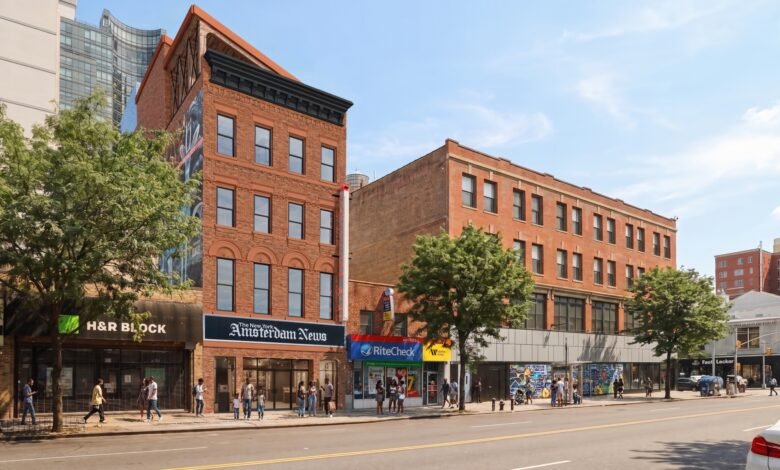
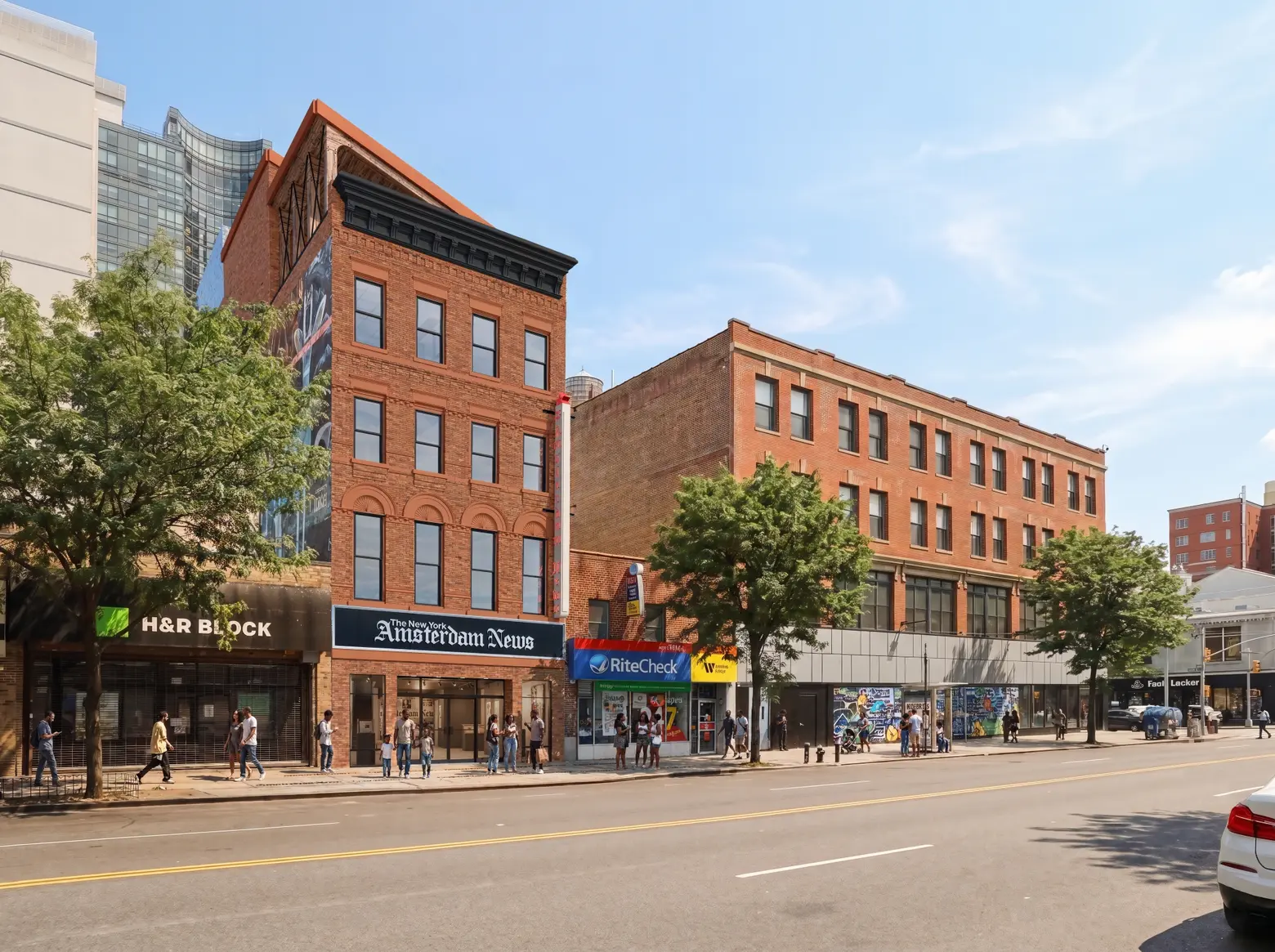
New York City’s oldest Black newspaper wants to reimagine its 19th-century Harlem headquarters as an educational and community hub. The New York Amsterdam News, which has operated from 2340 Frederick Douglass Boulevard since 1939, has unveiled plans to redesign the building as a national center for African American journalism history, with educational exhibitions, a research library, and a cafe, while preserving its historic newsroom. The newspaper, which tapped AYON Studio and Jerome Haferd Studio to redesign the building, launched a $44 million fundraising campaign for the project, as the New York Times first reported. If the financial goals are met, construction could begin in 2029.
The Amsterdam News was founded in 1909 in an apartment in San Juan Hill, a diverse neighborhood that was once home to the city’s largest Black population before being razed to make way for the Lincoln Center campus. The newspaper rose to prominence among nearly 2,000 Black newspapers in the country at the time, according to the Times.
Today, it is one of roughly 200 Black newspapers in the United States, according to the National Newspaper Publishers Association, which tracks Black-owned media companies.
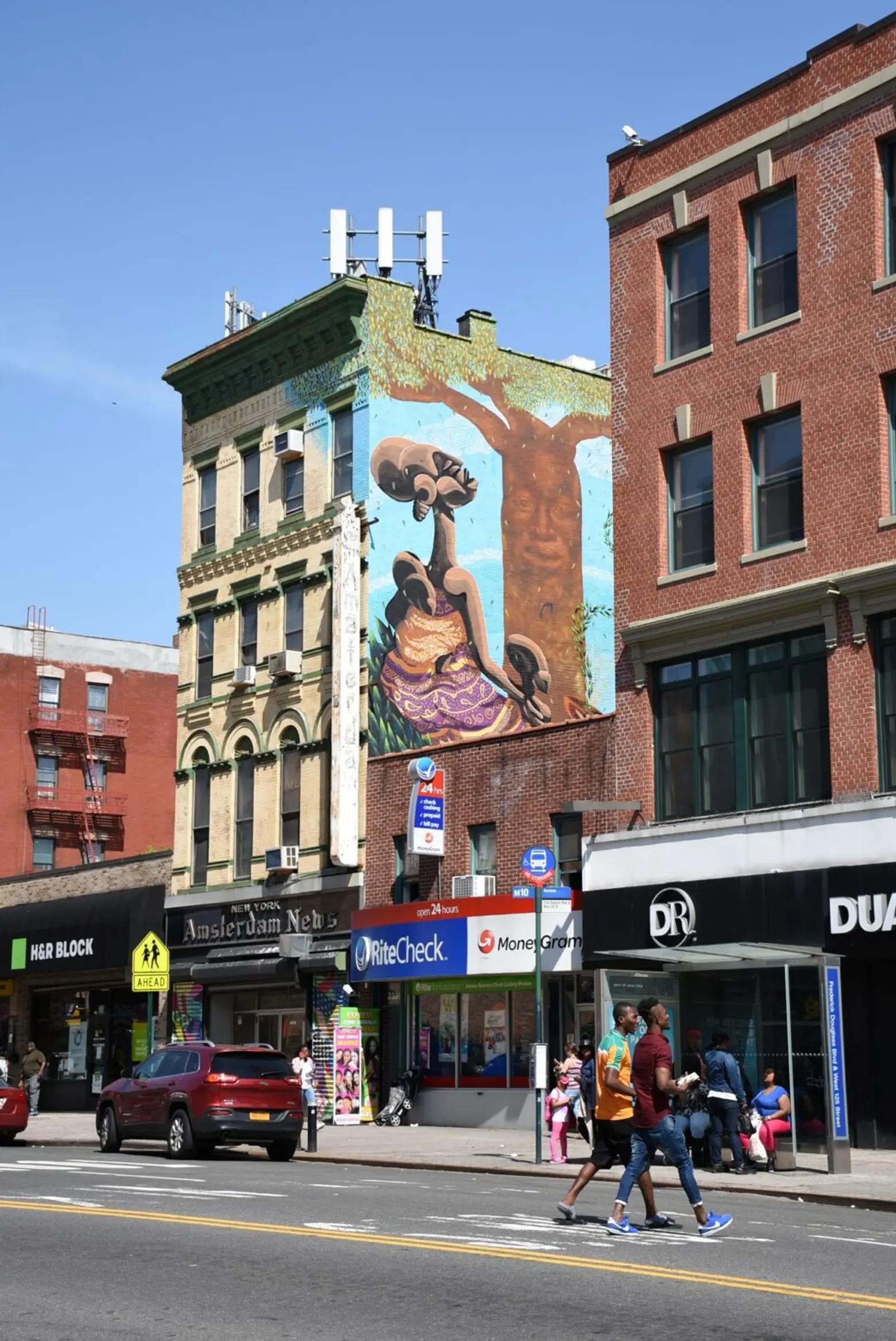
After quickly gaining a following, the paper moved to Harlem, where African Americans fleeing the Jim Crow South began arriving during the early 20th century. The paper operated out of several other buildings in the neighborhood before acquiring 2340 Frederick Douglass Boulevard in 1939, where it rented out space to other businesses to help keep the publication afloat.
The four-story walkup played a critical role in the history of African American journalism. Originally founded to challenge Booker T. Washington’s “accommodationist conservatism” and compete with its rival publication, “The New York Age,” the Amsterdam News developed a “peerless record,” serving as a platform for Black voices and a “Black world view,” according to the paper’s website.
In an Instagram post announcing its involvement in the project, AYON Studio said the paper was among the first to publish Langston Hughes, the first major publication to give Malcolm X a platform, the first to print the word “hip-hop,” and the only newspaper to stand with the Central Park Five.

When the building hosted its grand opening in 1941, its interior was pristine, and 10,000 people attended the celebration. Today, as the New York Times reported, there are broken windows letting in drafts and pigeon feathers and droppings on the floor.
Publisher and editor-in-chief Elinor Tatum took over the newspaper from her father, Wilbert, in 1997. Elinor also chairs the board of the Amsterdam News Educational Foundation, led by Siobhan Bennett, which plans to acquire the building.
In 2025, Tatum and Bennett enlisted two Black-owned architecture firms, AYON and Jerome Haferd, to develop plans and renderings for a reimagining of the building. The project was funded by a $500,000 grant from the Mellon Foundation, according to the Times.

“This building, this facade is not distinct,” Angel Ayón, founder of AYON Studio, told the Times. “What is special about this building is what happened here.”
AYON is also serving as the preservation architect for another historic renovation, the 120-year-old Pacific Library branch in Downtown Brooklyn.
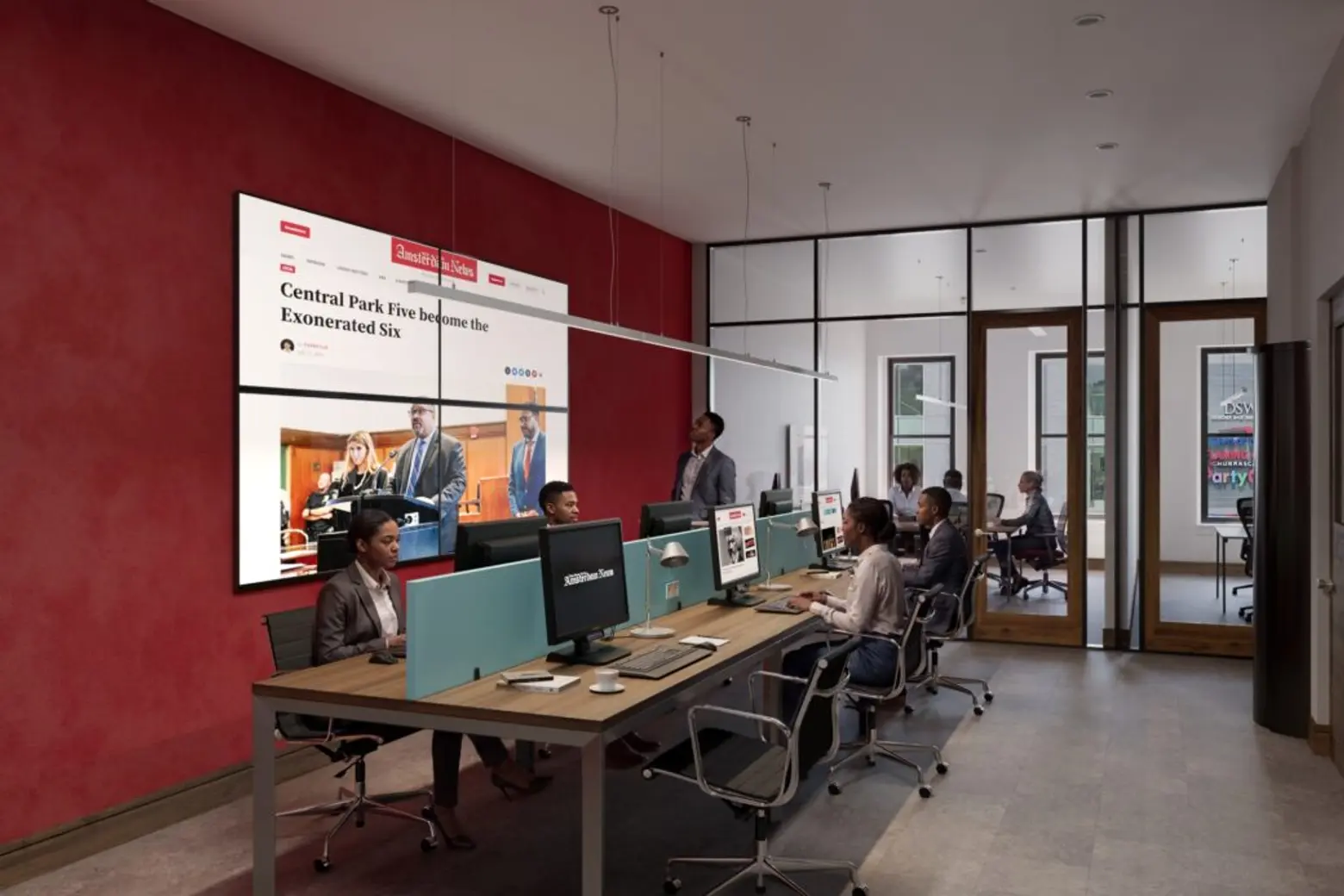
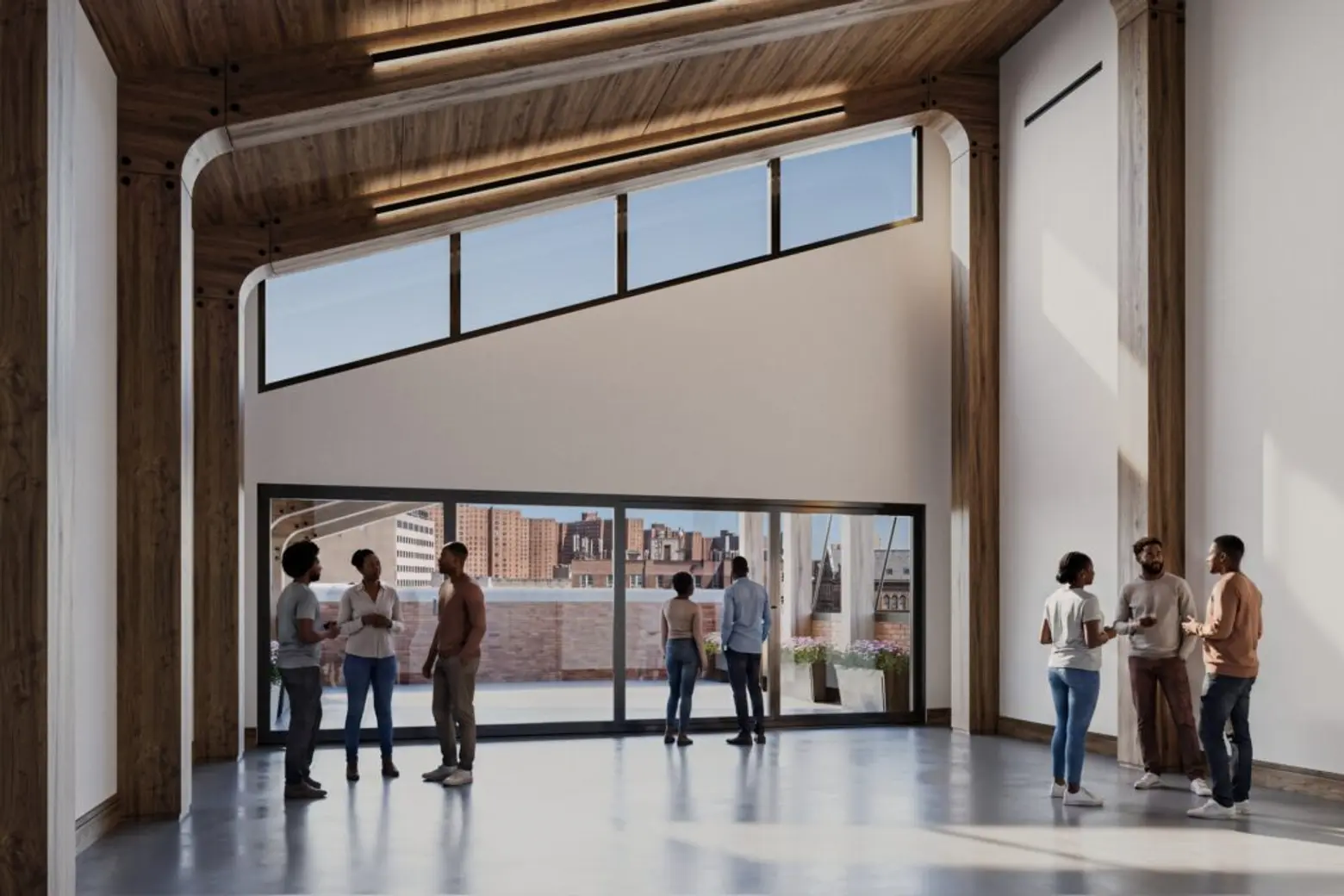
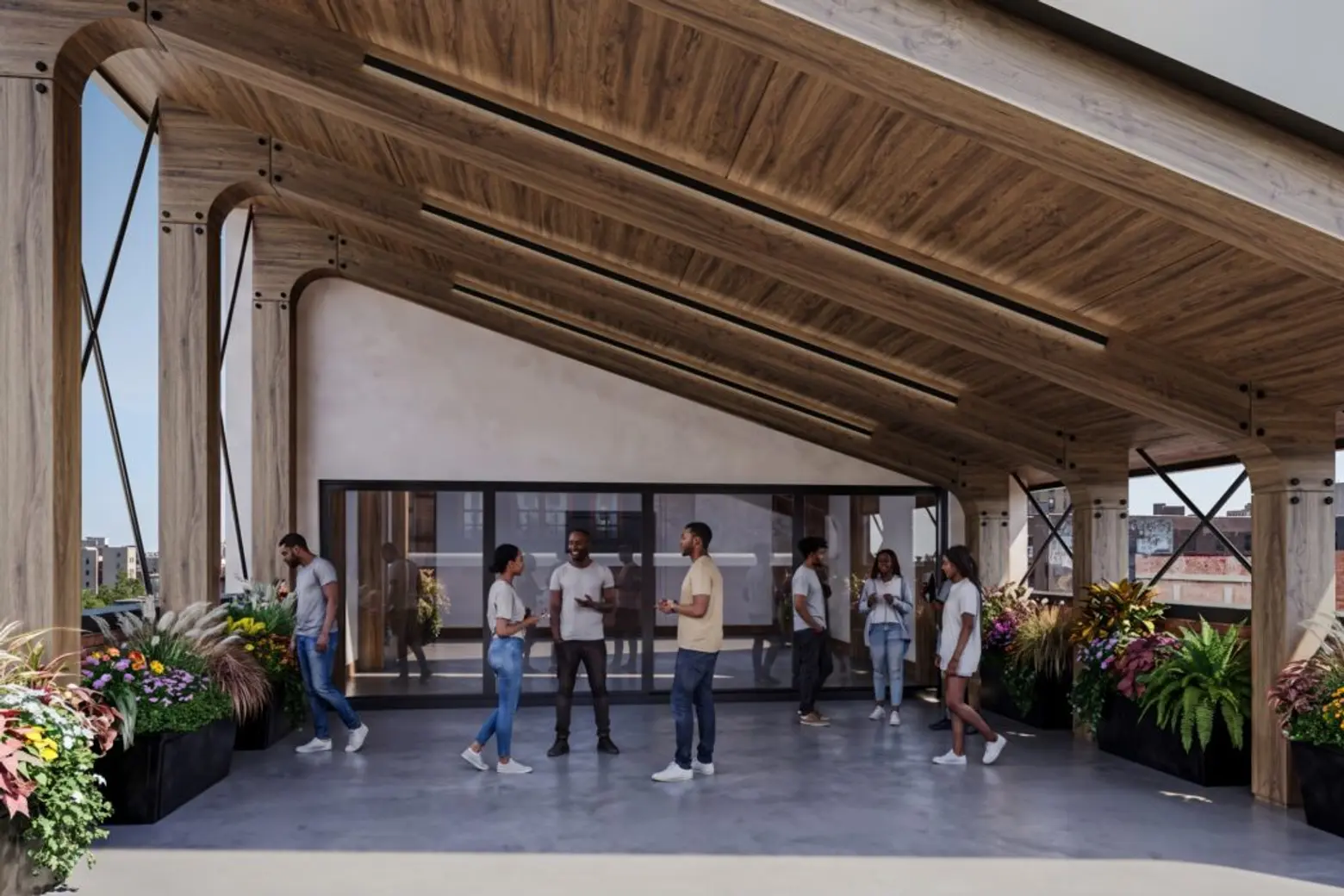
The redesign of the Amsterdam News building calls for installing an elevator, replacing antiquated electrical and plumbing systems, and adding an event and exhibition space on the roof. The firms will also restore the building’s historic facade, neon sign, murals, marble staircase, and mosaic floors, while refreshing its 1940s-era publisher’s office and former newsroom.
Beyond modernizing the existing spaces, the newspaper plans to honor its legacy in Black journalism by opening its archives to the public for in-person and online research. A separate $520,000 Mellon Foundation grant will fund an archivist to sort through the building’s contents and help preserve the newspaper’s historical records.
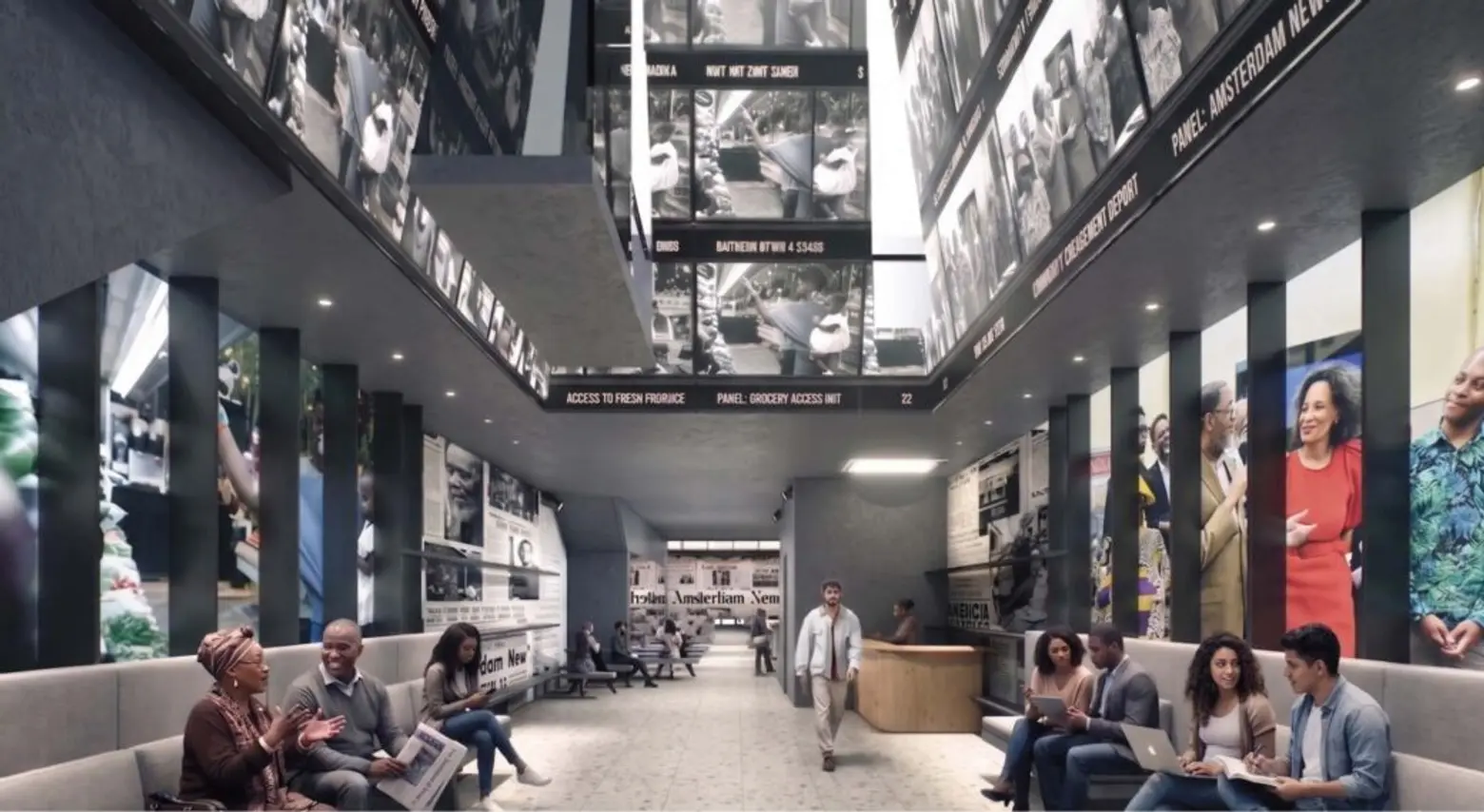
The plans also call for a new two-story digital portal on the ground floor dubbed “The Citadel of Black Truth.” Renderings depict an airy space lined with LED panels that could display photographs and other content from the newspaper’s past and present. Visitors will be able to enter the space for free.
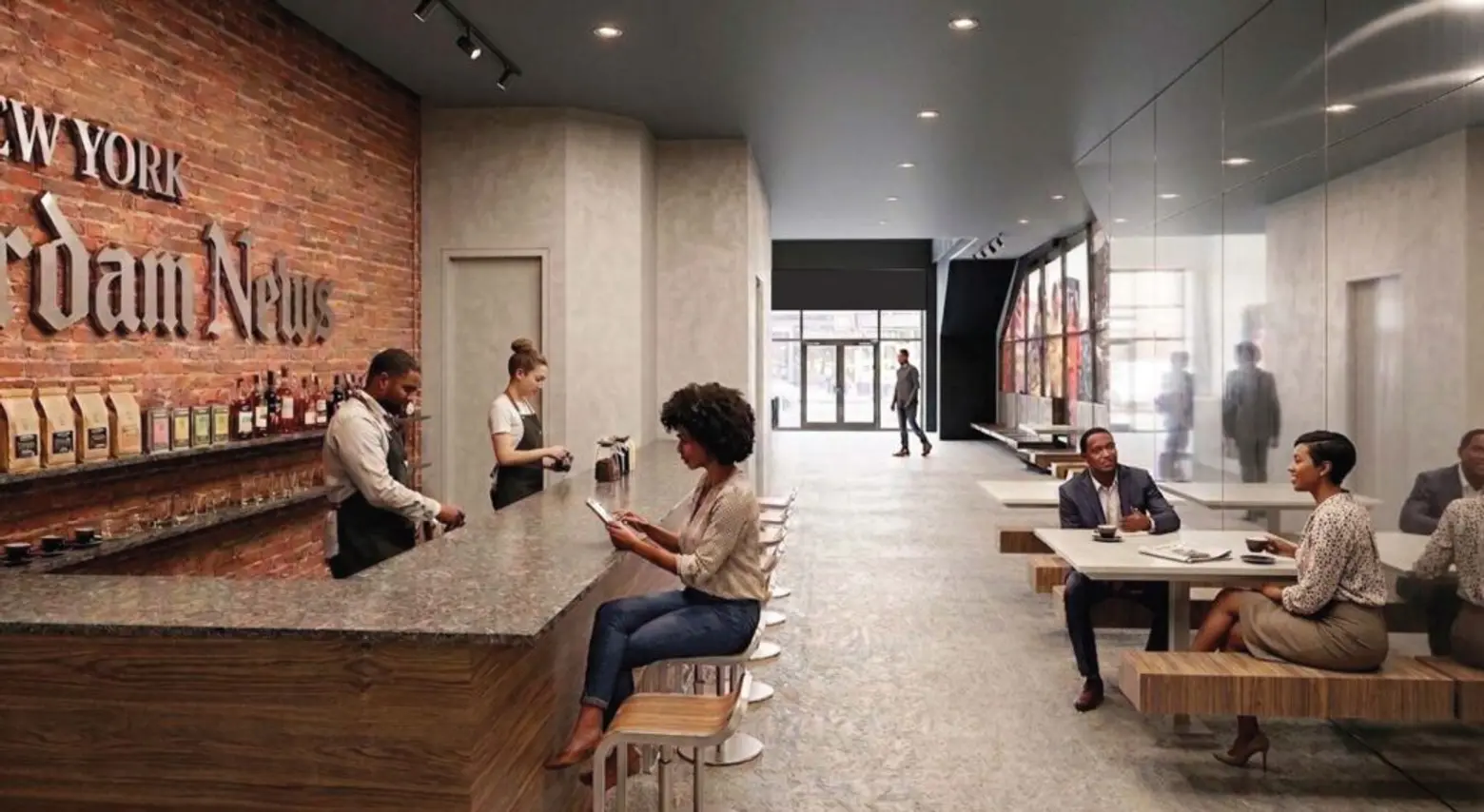
Other proposals include a fifth-floor event space with an outdoor terrace, as well as a cafe honoring the Civil Rights-era lunch counters where protesters staged “sit-ins” and gathered to share news.
“The stories of the Black press are not told very often and the story of the Amsterdam News is not really told,” Tatum told the Times. “Our idea is to tell those stories in our own space.”
Upon completion, most of the staff will occupy offices on the third floor, which the newspaper will lease from the foundation.
RELATED: