
“In September, I worked with a buyer searching in Mastic and Mastic Beach with a $500,000 budget,” Long Island real estate salesperson Jack Cutrone wrote in Newsday. “They wanted a modest three-bedroom, two-bathroom house they could move into without extensive repairs. Almost everything we looked at needed substantial work.”
That’s a familiar story for low-budget home shoppers everywhere.

Cutrone’s op-ed called for Nassau and Suffolk localities to zone for more housing, which is crucial, but there’s another point worth mentioning here.
America’s housing stock is deteriorating faster than it’s being fixed up. That’s a problem for typical buyers because it’s a lot easier to finance a $500,000 home than a $400,000 home that needs $100,000 in repairs.
In the first scenario, a family might put $50,000 down and get a $450,000 mortgage. In the second scenario, for the fixer-upper, they could put $40,000 down and get a $360,000 mortgage, but where would they get another $100,000 for the improvements?
Most people don’t have that kind of cash sitting around. Borrowing it against the property is not possible with a traditional mortgage because there’s not enough equity in the home yet. Funding upgrades with credit cards or personal loans would mean paying near-usurious interest rates, potentially doubling the cost of the work.
Mortgage products for fixer-uppers exist, but are more involved than traditional mortgages and have strings attached, such as deadlines to complete the renovations.
A mortgage is the only chance most Americans have to borrow hundreds of thousands of dollars over a long term at an attractive, predictable rate. The 30-year, fixed-rate mortgage is a unique product in an otherwise brutal financial system that lures consumers with easy access to high-interest, high-fee products.
The average rate of new 30-year mortgages might feel pricey at 7.2 percent, but only because it was under 3 percent five years ago. Credit card rates, in contrast, were high even when they were a historically low 11.8 percent in 2014. They began 2022 at 14.5 percent, hit 20 percent a year later and have been above that ever since.
Besides the challenge of financing improvements to a newly purchased home, buyers also might not be able to move in while work is underway. That could mean paying rent and a mortgage at the same time.
What, then, is the solution for the fixer-uppers that dominate the low end of the housing market?
It seems more practical and ultimately less expensive to let investors and house-flippers buy, upgrade and sell these dated homes. They have better and cheaper access to capital, materials and contractors than consumers do, and sell homes in move-in condition so buyers need not pay for two residences at once.
Unfortunately, the political establishment has taken to blaming these businesspeople for raising the cost of housing because — gasp — they try to make a profit. That’s why Congress and state legislatures have for several years been introducing bills to keep investors out of the housing market. Even the otherwise commendable 21st Century Road to Housing Act has such a provision.
Institutional investors, rather than mom-and-pop house flippers, are usually (but not always) the target of such legislation. Large-scale buyers are a convenient villain but perform an important role when the housing market crashes, as it did in 2008, by stepping in to prop up demand as consumers stepped away. They can also do renovations at scale, which our housing stock needs.
Anti-real estate bills based on populism rather than good policy are sponsored by socialists, conservatives and moderates alike. Pandering is inevitable in our political system, but can be defeated or minimized by advocacy, as shown by the removal of a build-to-rent ban from the Road to Housing bill.
Most New Yorkers are blithely unaware of how the sausage is made in Washington, Albany and City Hall, but the results determine whether clients like Jack Cutrone’s succeed in their quest for a quality, affordable home.
Read more

It’s the Preserve Dated Kitchens Act: Bill targets house-flippers

Home-flip tax would punish the good guys

Why Hochul’s crackdown on real estate investors makes absolutely no sense
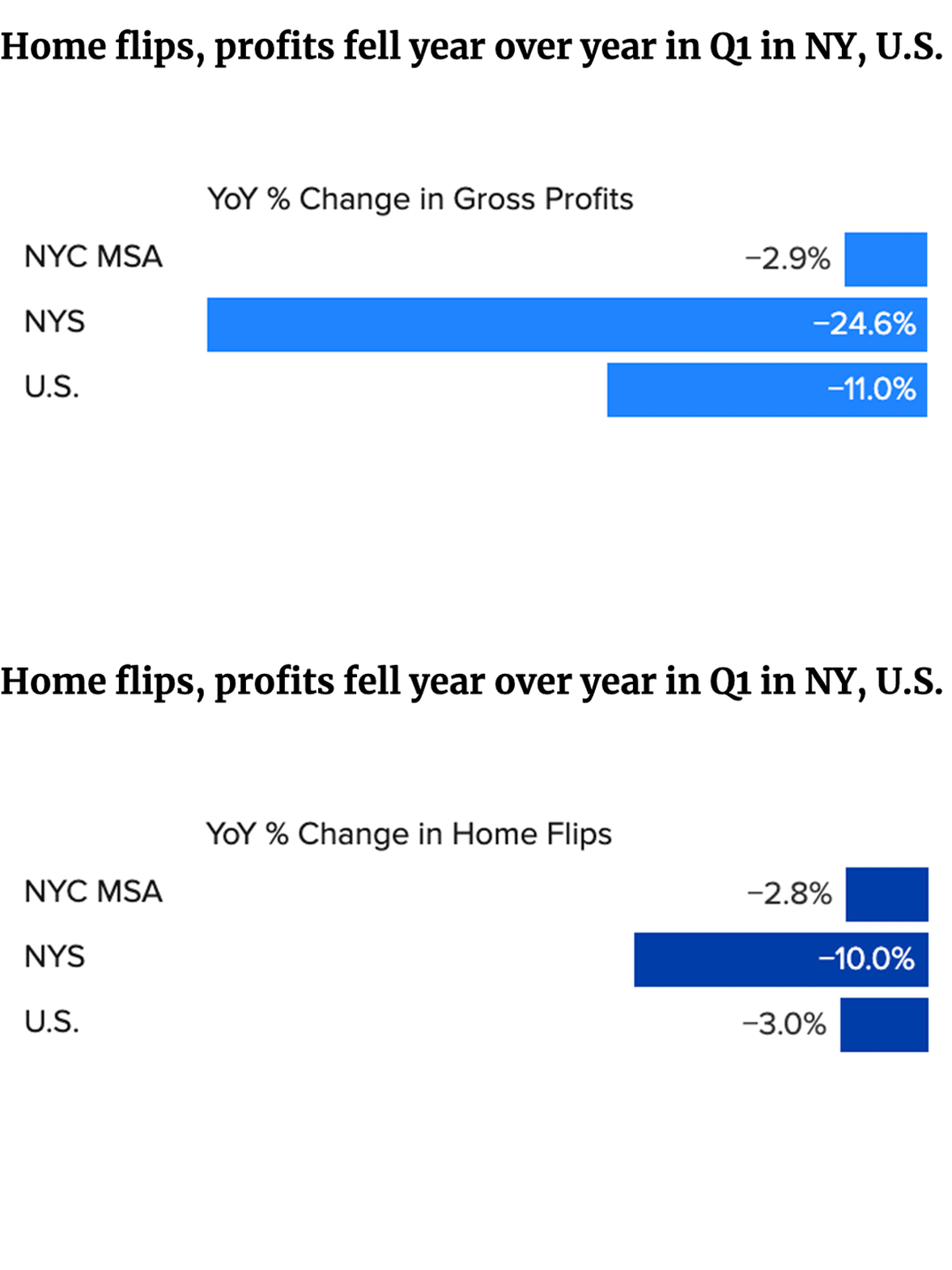
“The math has stopped working”: NYC home flipping drops as state legislators propose new tax
Read more
Home-flip tax would punish the good guys
Why Hochul’s crackdown on real estate investors makes absolutely no sense
“The math has stopped working”: NYC home flipping drops as state legislators propose new tax