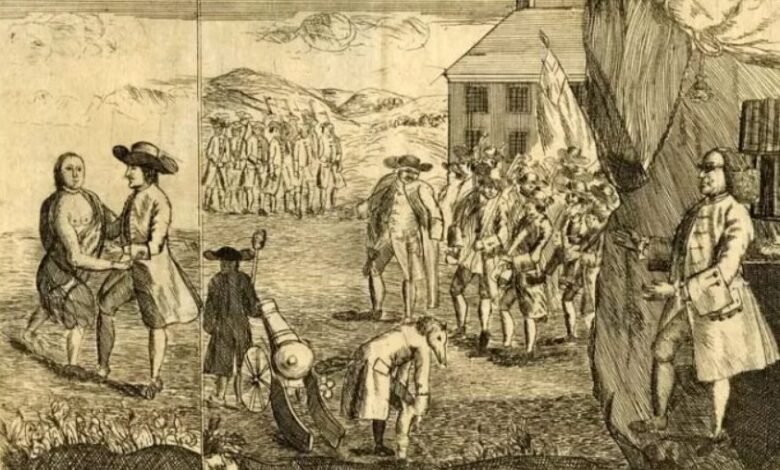
 On Tuesday, November 17, and Wednesday, November 18, National Book Award–winner Ned Blackhawk will deliver two lectures, “The Ruptures of War and the Afterlife of Dispossession: Native Nations, Benjamin Franklin, and the Coming of the American Revolution.” The talks will offer new insight into the intersections between Ben Franklin‘s family and the Wampanoag community, and the influence of these relations on Franklin’s own political philosophies as the American Revolution approached.
In Part I of this series (registration here), Ned Blackhawk revisits Benjamin Franklin’s early life through the overlooked history of his mother, Abiah Folger.
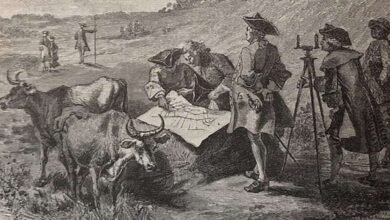
The youngest of nine children and the only member of her family born on Nantucket Island, Abiah grew up in a world structured by Wampanoag-English relations. That world was sustained in part by her father Peter’s ties to Wampanoag leaders, which he built as an interpreter, surveyor, and schoolteacher.
Franklin returned to his mother’s experiences and his grandfather’s commitments throughout his life and writings, yet the influence of these Native relations on him has gone largely unexamined.
The lecture then turns to the seismic ruptures of Metacom’s War (1675–78, also known as King Philip’s War) and to Peter Folger’s rebuke of the colonial authorities, which his grandson later praised for its “manly freedom.”
It identifies the war’s legacies as a central chapter in the Folger family’s seventeenth-century world and as a formative inheritance for the political philosophies and governing strategies Franklin carried into the eighteenth century, as he shaped the founding of our nation.’
In Part II (registration here), Blackhawk will expand on his National Book Award–winning study, “The Rediscovery of America,” exploring how “the Indigenous origins of the American Revolution” offer new and vital perspectives on the Revolution’s continental origins.
After the French and Indian War (1754-1763), interior affairs recalibrated colonial politics in Pennsylvania and emboldened anti-monarchical forces to attack Indians and Crown authority alike.
When the Paxton Boys massacred Conestoga Indians in December, 1763, Franklin condemned them in terms that echoed his family’s past.
As we learn in Part I, Peter Folger had mediated between Wampanoag communities and an embittered colonial order after Metacom’s War. His grandson now defended Native people against vigilantism and the incipient “settler sovereignty” it expressed.
But as Franklin’s ambitions turned toward western land speculation, imperial reform, and ultimately independence, his commitment to Native diplomacy wavered. Blackhawk traces these conflicts over Indian affairs into the Revolution’s formative years.
He asks what Franklin carried forward from the Folger family’s world and what he abandoned, as Native nations faced shrinking avenues for diplomatic and legal redress that would define their struggles in the centuries to come.
An enrolled member of Te-Moak Tribe of the Western Shoshone Indians of Nevada, Ned Blackhawk is the Howard R. Lamar Professor of History at Yale University, where he serves as faculty coordinator for the Yale Group for the Study of Native America (YGSNA).
He is an author and editor of works in Indigenous History, and his 2023 book, The Rediscovery of America: Native Peoples and the Unmaking of U.S. History, won several national awards, including the National Book Award for nonfiction.
A national bestseller, it was translated into eight foreign languages. A young adult edition of The Rediscovery of America will be published November 17, 2026 through a partnership between Seven Stories Press and Penguin/Random House.
Blackhawk’s current work focuses on the aftermath of the Seven Years’ War and the place of Native nations in the unfolding Revolutionary War, portions of which were featured last year in the Boston Globe and the Atlantic.
These free events will take place at the The New York Public Library’s Stephen A. Schwarzman Building, 476 Fifth Avenue, in Manhattan.
The lectures will not be livestreamed, but a video recording of both lectures will be made available on NYPL’s YouTube channel later in November.
These lectures are the New York Public Library‘s Joanna Jackson Goldman Memorial Lectures on American Civilization and Government.
Read More About Benjamin Franklin
Illustration: A Henry Dawkins cartoon from 1764 depicting Quaker Israel Pemberton dancing with a Native American and Benjamin Franklin scheming to control the Quaker Party for his own political gain (Historical Society of Pennsylvania).
Source link