 Nowadays, trolley services in the United States are often seen as a novelty only active in select cities. At one point in history though, trolleys were one of the primary means of public transit throughout much of the country. In conjunction with the mass availability and the infrastructural significance of streetcars, there came labor disputes.
Almost every major city had a streetcar strike in the period 1895 to 1929. Some of these are well-known, such as the 1907 San Francisco Carmen’s Strike, the 1929 Streetcar Workers Strike in New Orleans, and the May 1901 Albany Trolley Strike against the United Traction Company (UTC).
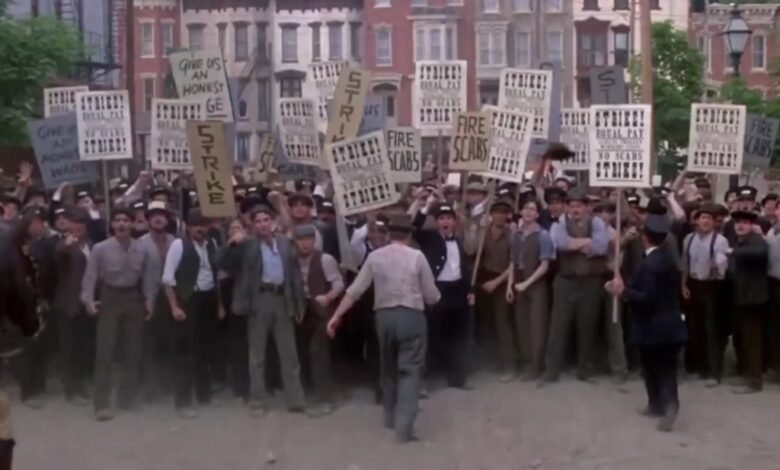
The latter was featured in William Kennedy’s Pulitzer Prize-winning novel Ironweed and serves as the catalyst for protagonist Francis Phelan’s life on the run and his lifelong struggle with guilt.
In the spring of 1920, a series of strikes organized in Rochester, Syracuse, and Utica threatened to shut down public transportation for all three major upstate cities.
On May 1, 1920, employees of the New York State Railways (NYSR) Company in Rochester, members of the Amalgamated Association of Street Railway Employees (AASRE), went on strike after negotiations for better wages fell out between the workers and representatives of the company.
The company offered a raise of 10 cents an hour, while the workers’ demands, according to a contemporary New York Times article, were seeking a raise of approximately 90 percent.
Though some cars from other companies were running, public transit in the city was largely held up because of this initiative. Representatives of the NYSR union in both Rochester and Utica stated that the walkout was not advised by the union.
The threat of strikes expanding to other locales became most apparent when it was revealed that NYSR union members in Utica were themselves contemplating a strike. The 680 union members were set to take a vote on the matter on May 2.
Several members were reported to have said they would vote against the strike. Evidently though, they were not in the majority. On May 2, Utica railway employees initiated their own strike, voting unanimously to not return to work.
Utica workers were offered a 10-cent wage increase during negotiations. The strikers noted that they were seeking a 40-cent raise, in addition to an 8-hour day. Motivation for these demands, according to the Utica Daily Press, came from the workers’ desire to not have to work overtime in order to make ends meet.
The impact of this strike was felt immediately. Reports indicate that, as a result of services being paused, various businesses were effected by the lack of trolleys running. Many workers in the city were left having to talk to work or, if they were lucky, were able to ride with those who owned automobiles.
Traditional railway traffic saw a large increase during the strike, and institutions such as theaters and stores saw a large loss of patronage.
The strikers in Rochester, after just two days of action, were said to have been in favor of returning to work. William D. Mahon, president of the AASRE, stated that the strikes in Utica and Syracuse were held in sympathy with the one in Rochester and that they would likely end soon after the Rochester strike concluded.
This ultimately occurred and the New York Times reported on May 3rd that the majority of those employed in Rochester voted to return to work. On May 4, the strikers in Utica voted to do the same. It’s speculated that the strikers demands went unmet.
Read More About New York Labor History
J.N. Cheney is an independent historian focusing on the labor movement, radical politics, and community action where he lives in the Mohawk Valley. His book is Women, Immigrants, and the Working-Class Battle in Little Falls, New York: The Textile Strike of 1912-1913 (Algora Publishing, 2025).
Illustration: The 1901 Albany Streetcar Strike scene from the movie Ironweed, 1987.
Source link