 Don Zrebiec, who lives in the Rochester area, started writing at 90 and published his first book at 91.
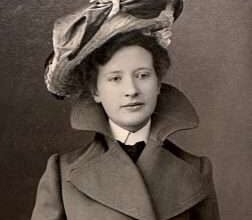
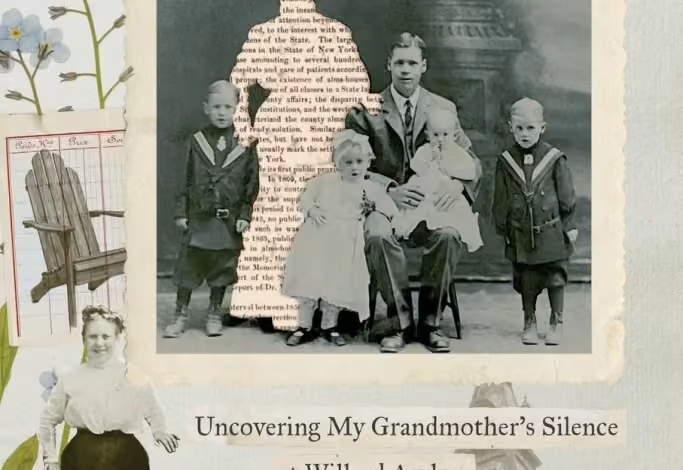
She Was Here: Uncovering My Grandmother’s Silence at Willard Asylum (2026) recovers the life of his grandmother Catherine Smoral, a Polish immigrant and mother of nine who was committed to Willard State Hospital in the 1920s and died there. Her children were scattered to orphanages, and for decades her story went untold.
Willard State Hospital – originally opened as the Willard Asylum for the Insane and later known as the Willard Psychiatric Center – was a large psychiatric institution in Willard (in the town of Romulus, in Seneca County, NY).
Following investigations by New York Surgeon General Dr. Sylvester D. Willard (1825–1865), into poor conditions in county almshouses, state legislation in 1865 authorized a dedicated facility for individuals with chronic mental illness.
 Opened in 1869, it operated for over a century, housing tens of thousands of patients on a rural campus overlooking Seneca Lake, utilizing a self-sustaining farm and detached-building model.
During the 1920s and 1930s, Willard housed more than 4,000 patients at a time, making it one of New York’s largest psychiatric institutions. Deinstitutionalization led to its shutdown on May 1, 1995.
That year more than 400 patient suitcases, trunks, and bags were discovered in an attic on the grounds.
Later transferred to the New York State Museum and documented by photographer Jon Crispin, the personal items became the subject of exhibitions, books, and historical research into the lives of patients and staff.
The patient belongings were a reminder of the years of suffering the facility engendered, including in the life of Catherine Smoral. Don Zrebiec met her only once, as a six-year-old in 1940.
After a grandson challenged him not to let her be forgotten, he rebuilt her life from archives, census records, old newspapers and family memory.
What begins as a personal search for answers becomes a powerful examination of how grief, poverty, and motherhood were criminalized for immigrant women, and how one woman’s disappearance reshaped generations of a family.
She Was Here is not only a reconstruction of Catherine Smoral’s institutionalization, but a deeply human account of the consequences that followed.
Her children were separated and sent to orphanages. One son died inside the same institution that confined her. The surviving children learned to survive through silence, carrying unspoken trauma into adulthood.
Yet alongside loss, the book reveals something remarkable: resilience. Against extraordinary odds, Catherine’s descendants rebuilt their lives, preserved their bonds, and quietly transformed suffering into strength.
Through archival research, family interviews, and historical context, Zrebiec connects Catherine’s story to a broader system that confined thousands of immigrant women for exhaustion, grief, or nonconformity.
The book ultimately moves beyond tragedy toward reclamation – contrasting the failures of institutional care with modern approaches to recovery, dignity, and remembrance. Catherine’s name, once reduced to a patient number, is restored and honored.
Book Purchases made through Bookshop.org support both your local independent bookstore and New York Almanack’s mission to report new publications relevant to New York State. Purchases via this Amazon link also support the Almanack.
Photo below: View of west-facing Main Building and north wing of Willard Asylum for the Insane during construction in 1869.
Source link