 In the archives of the Saratoga Springs Public Library, history often arrives in unexpected ways. Sometimes, it appears in a long-forgotten photograph, a stack of handwritten correspondence, or a faded ledger tucked inside an archival box.
Here, it arrived as a partially processed collection donated to the Saratoga Room over two decades ago.
Inside were medical records, physician notes, prescriptions, society minutes, and treatment observations documenting cancer care in the early twentieth century. One word repeatedly appeared throughout the collection: radium.
For most Americans, radium evokes the story of Marie Curie, the Radium Girls, and the tragic consequences of radiation exposure.
Yet these documents revealed a lesser-known chapter in medical history, one centered in Saratoga Springs, New York, and led by physician Dr. Douglas Calhoun Moriarta, a surgeon, civic leader, and early cancer specialist whose work placed Saratoga among the communities experimenting with one of medicine’s most revolutionary treatments.
The Promise and Peril of Radium
A series of scientific discoveries that transformed medicine marked the late nineteenth and early twentieth centuries. In 1896, French physicist Henri Becquerel discovered uranium radiation.
Two years later, Marie and Pierre Curie isolated radium and polonium, opening the door to an entirely new understanding of radioactive materials. By the early 1900s, radium was being marketed not only as a medical treatment but as a health and beauty aid.
Manufacturers marketed radium-infused cosmetics, face creams, soaps, and powders as products that promised vitality and rejuvenation, even though people understood little about the dangers of radiation exposure.
Within fifteen years of radioactivity’s discovery, physicians around the world had experimented with radium as a treatment for cancers and skin diseases. The same element that illuminated watch dials and inspired consumer products was increasingly viewed as a powerful therapeutic tool.
It was in this atmosphere of optimism and scientific exploration that Dr. Moriarta began incorporating radium into his medical practice in Saratoga Springs.
The risks would become apparent only later. By the 1920s, workers painting luminous watch dials, later known as the Radium Girls, developed devastating illnesses linked to radiation exposure.
Their landmark legal victory in 1928 helped expose the dangers of radioactive materials and prompted greater public awareness of radiation safety.
An Archival Discovery
The collection that inspired this research raised an immediate question: could materials associated with radium treatment still be radioactive more than a century later?
The answer was potentially yes. Radium has a half-life of approximately 1,600 years, meaning any residual contamination could remain detectable for generations.
Concerned about hazards, with the library-acquired Geiger counter, the collection items were tested, and the readings remained within safe levels. Although experts considered the materials safe to handle, preservation protocols still restrict unnecessary contact with the collection.
After addressing safety concerns, a deeper historical question arose: who was the physician whose records documented the use of radium therapy in Saratoga Springs?
From Poverty to Physician
The story of Douglas Calhoun Moriarta is one of extraordinary determination. Born in 1859 to Peter and Hannah Moriarty, Douglas faced adversity almost immediately.
Shortly after his birth, his father abandoned the family and never returned. According to family accounts recorded by his daughter, Hannah Moriarta Adler, the family subsequently dropped the “Y” from their surname, becoming Moriarta.
Poverty and hardship marked life. Adler later described her father as “an undersized, unruly, indifferent child at school,” whose shabby clothing and extreme shyness contributed to his decision to leave school early. She recalled that her father “got little schooling and not too much to eat.”
As a young boy, Moriarta found work at the Hathorn mineral spring, where he performed labor without pay, slept on straw near the spring, and relied on leftover food from local hotel kitchens.
Later, while working as an errand boy in a pharmacy for three dollars a week, he discovered a passion that would change his life. After witnessing a chemical reaction and asking for an explanation, a clerk handed him a book. The experience ignited a lifelong fascination with science, medicine, and learning.
Driven by ambition, Moriarta eventually organized informal evening classes for fellow drug clerks and won academic prizes in science. He later earned a scholarship to Columbia College and graduated with a degree in pharmacy in 1883.
Recognizing greater opportunities in medicine, he enrolled in Albany Medical School, completing a three-year curriculum in only two years and graduating with the highest academic standing of his era.
Building a Medical Legacy
Returning to Saratoga Springs in 1885, Moriarta established a medical practice that would span over five decades. In 1890, he built his home and office at 511 Broadway and married Harriet Frances Merchant later that year.
His influence steadily expanded. In 1910, Moriarta partnered with Dr. George F. Comstock to establish the Saratoga Cure and Infirmary at the corner of Regent and Phila Streets.
The facility reflected Saratoga’s growing reputation as a center of therapeutic medicine, combining traditional medical treatment with the region’s longstanding belief in the healing properties of mineral waters.
Throughout his career, Moriarta embraced innovation. He acquired some of the earliest sterilization equipment available for medical facilities and maintained affiliations with organizations including the American College of Surgeons, the American Radium Society, and professional medical societies on the local, state, and national levels.
A Pioneer of Radium Therapy
By the 1920s, radium was among the most expensive and scarce substances in the world. At the time, the United States possessed only about fifty grams of radium, distributed among a handful of major medical centers.
Yet Moriarta obtained and used radium for therapeutic purposes, becoming, for a significant period, the only private physician north of New York City known to own and utilize radium.
Through journal articles, case studies, and medical presentations, he documented his observations and treatment outcomes, contributing to the growing body of knowledge surrounding radiation therapy.
Working during an era when treatment protocols were still evolving, Moriarta stood among a generation of physicians willing to explore new methods in the fight against cancer despite limited scientific understanding and significant personal risk.
Ironically, the physicians pioneering these treatments often worked without the radiation protections considered standard today. Moriarta handled radium regularly for decades.
Although no direct causal relationship was ever established, records note that he developed diabetes more than twenty years before his death, and Dr. Frederick Banting, the physician credited with the discovery of insulin, began treating him in 1923.
Whether his occupational exposure played any role remains unknown.
Beyond Medicine
Moriarta’s achievements extended well beyond the examination room. He served as physician to the Saratoga Race Course for over forty years and held numerous public offices, including president of the Chamber of Commerce, city physician, health officer, Saratoga County coroner, and medical examiner for the World War I Draft Board. He was also a founding member of the Saratoga Medical Association.
As president of the Sewer, Water, and Street Commission, he oversaw the construction of Saratoga Springs’ sewage disposal plant, among the first of its kind in the region. The project became a model for similar systems elsewhere and remains operational more than a century later.
Moriarta was equally passionate about Saratoga’s mineral springs. He published extensively on their therapeutic value and advocated for their conservation, arguing that their medicinal usefulness depended upon maintaining their natural purity.
A Legacy Still Visible Today
Dr. Douglas Calhoun Moriarta died in 1944, but the medical legacy he helped establish continues to resonate throughout the region.
Saratoga Hospital’s modern radiation oncology program, including the Mollie Wilmot Radiation Oncology Center, represents the latest chapter in a story that began with early experiments in radiation therapy more than a century ago.
For modern cancer patients, it’s difficult to imagine an era when physicians worked with radioactive materials using little more than hope, observation, and determination.
Yet it was the willingness of physicians such as Moriarta to explore unknown territory that helped lay the groundwork for today’s sophisticated cancer treatments.
As both an archivist and a breast cancer survivor, these records represent more than historical artifacts. They document the human pursuit of answers in the face of disease.
These records remind us that trial, error, perseverance, and extraordinary courage often build progress.
In the story of Dr. Douglas Calhoun Moriarta, Saratoga Springs possesses not only a fascinating local history but also a remarkable chapter in the broader history of cancer treatment.
Read More New York Medical History
Michelle Isopo, M.S.I.S., is an archivist and history librarian who has worked in public libraries, archives, and special collections since 2018. As a breast cancer survivor, her research examines the intersection of medical history, archival collections, and the human stories behind advances in cancer treatment. Her research into the life and work of Dr. Douglas Calhoun Moriarta examines Saratoga Springs’ place in the history of cancer treatment and the early use of radium therapy.
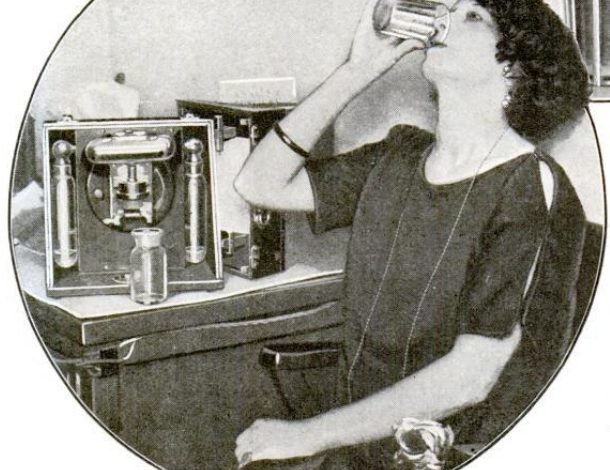
Illustrations courtesy the Saratoga Springs Public Library (with the exception of the first), from above: Drinking Saratoga Springs mineral water with radium (Popular Science, June 1923); Douglas Calhoun Moriarta as a Dipper Boy at Hathorn Spring, ca. 1873; portrait of Dr. Moriarta by an unknown photographer, 1859–1944 (donated to the Library by Jo-Ann Moriarta); Dr. Moriarta’s home and medical office, 511 Broadway, in Saratoga Springs.
Source link