
Like all stories about FARE Act violations, a City Reporter article Thursday focused entirely on what rental brokers did wrong.
I get it. Journalists cover crashes, not landings. But sometimes the landings are the news.
That’s literally true for commercial airlines. Their crash rate has been reduced to essentially zero, an amazing achievement given the frequency of tragedies during the industry’s first few decades and the huge number of flights today.
Rental brokers in New York City have a similar story to tell. Better, actually.
From the very outset of the FARE Act, which radically changed the way brokers had operated for decades, only a tiny fraction of tenant-broker interactions were flagged by tenants as problematic. And only a tiny fraction of that tiny fraction resulted in fines.
Even during the pro-tenant Mamdani administration with its beefed-up consumer protection agency, and a rental market that increasingly resembles the Hunger Games, the number of FARE Act complaints and inquiries keeps going down — and only 1 of every 45 has led to a fine.
Yet the City Reporter headline blared: “NYC Broker Fees Are Banned but Not Gone as City Ramps Up Enforcement: In a year and a half, officials issued $60,000 in penalties against people violating the FARE Act.”
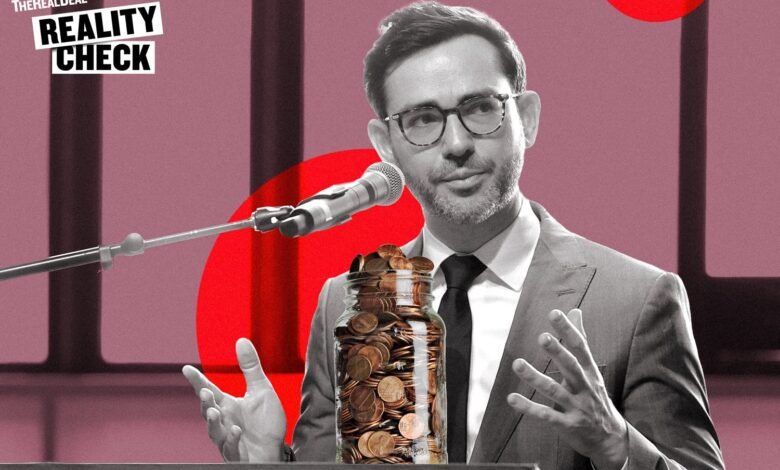
That’s less than 3 cents for every apartment in the city. The article said $24,000 has been recovered for tenants, but omitted the context: That’s only 1 cent per rental unit. The U.S. doesn’t even mint pennies anymore.
There are seven times as many murders as FARE Act fines. News coverage rightfully celebrates that homicides are at a record low. I haven’t seen any headlines that say, “Homicides Banned But Not Gone: 309 killed in NYC last year.” But that’s how broker fines are covered.
The city is collecting a paltry $115 a day in FARE Act fines, the same amount it gets from one double-parking ticket. In a city of 2.3 million rental units, where vacancies often trigger a frenzy of apartment seekers, compliance has been stunningly high.
New Yorkers are not known for following rules. A red light is a vague concept to pedestrians. Ten percent of subway riders and 44 percent of bus riders don’t pay the fare. Drivers in the city rack up 45,300 parking and camera violations per day.
Yet the City Reporter highlighted 55 FARE Act fines between June 2025 and mid-October 2026, which is not even one per week. The story did say in the eighth paragraph that complaints have fallen recently, but omitted that they were incredibly rare in the first place.
It would be naive to think that all violations are reported. Probably many are not, especially when the tenant who is illegally asked to pay a broker gets the apartment. If you badly want to see a Taylor Swift concert, and a scalper sells you front-row seats, you’re not going to turn him in.
But the vast majority of people who inquire about an apartment don’t get it, and yet very few accuse the broker of violating the FARE Act.
I’m not saying journalists shouldn’t write about violations. The Real Deal certainly does. That’s how brokers and renters learn how the law works.
But a feature about plane crashes will always note that commercial airlines are the safest way to travel. That context is inevitably missing from stories about the FARE Act.
Rental brokers aren’t getting any credit from the media or the mayor’s office. These modestly paid New Yorkers are navigating an intensely competitive airspace with frenetic customers and consistently landing the plane.
What we’re thinking about: Sam Levine, the mayor’s consumer protection commissioner, wants the state to prohibit apartment brokers from representing both the tenant and the landlord because, he said, owners and renters have “completely misaligned interests and are on opposite sides of a transaction.”
But tenants’ and landlords’ interests are not completely misaligned. I would say they are more aligned than not: Landlords want to fill a unit and tenants want to rent a unit. The broker helps them come to terms and only gets paid if they do.
Read more

How NYC’s ban on broker fees sent rentals into “convoluted, questionable” territory

The Daily Dirt: FARE Act returns just $7 per complaint to consumers

Court rejects REBNY’s FARE Act appeal