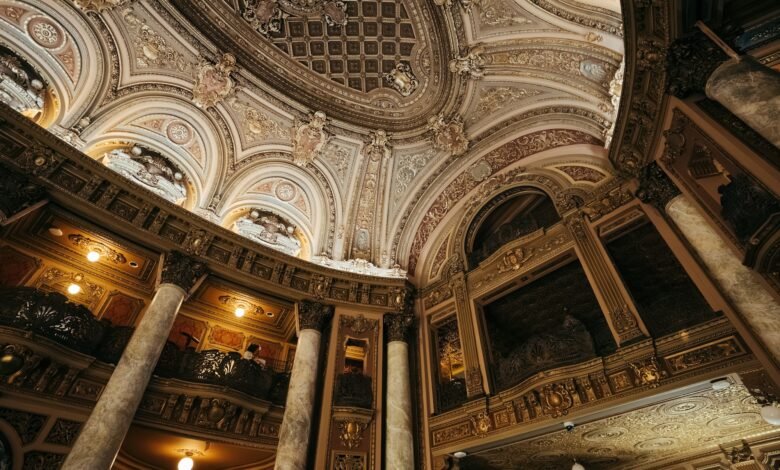
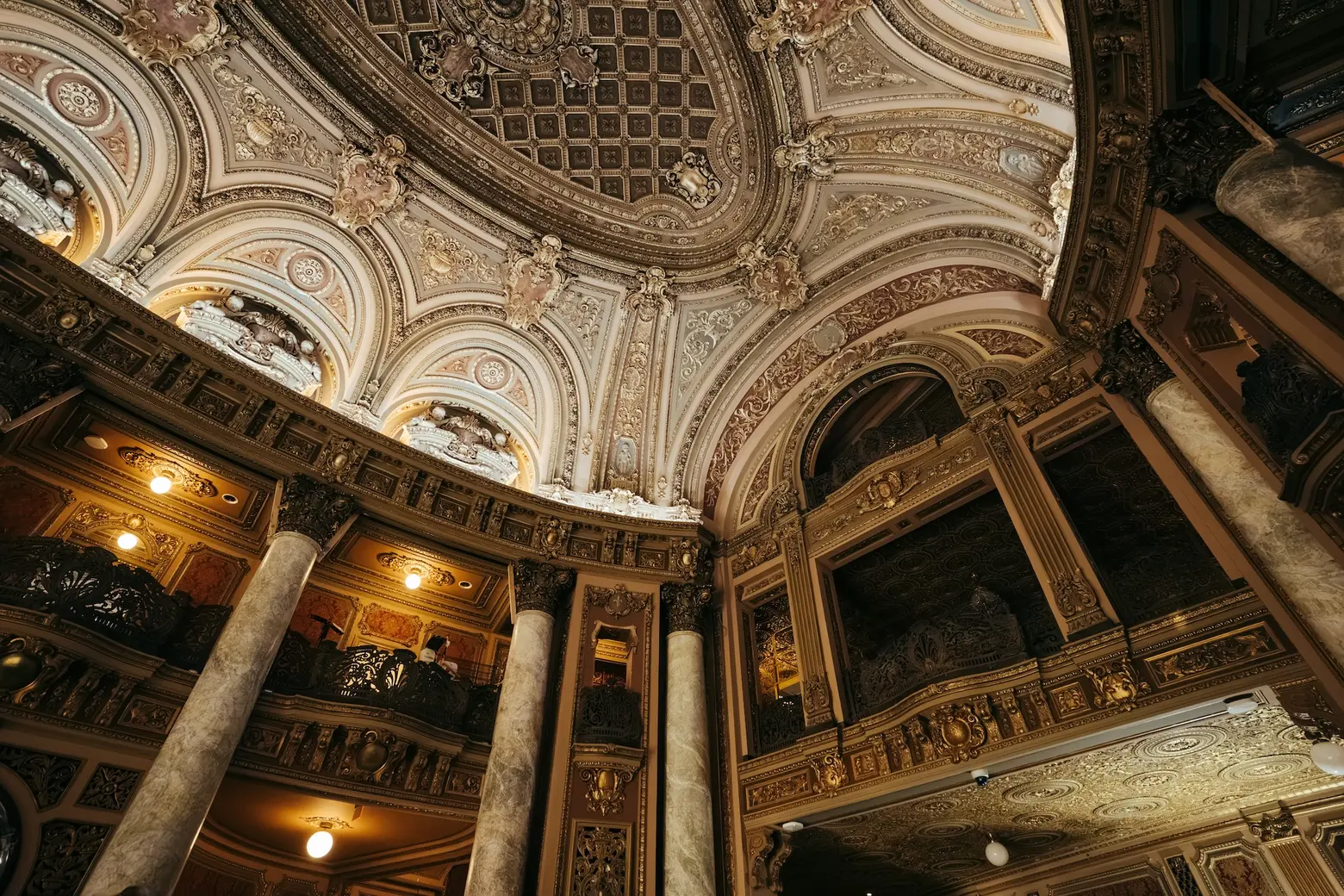
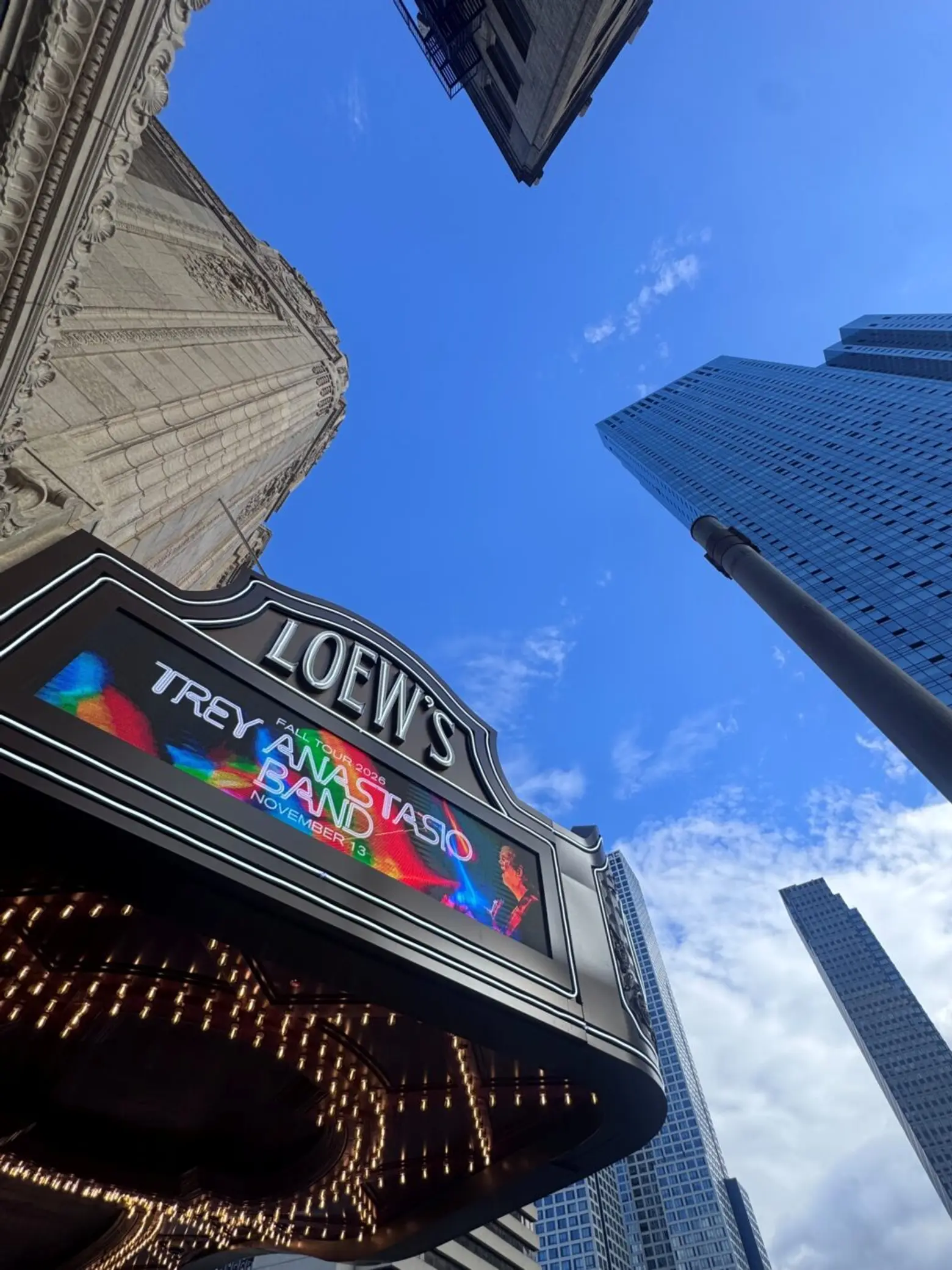
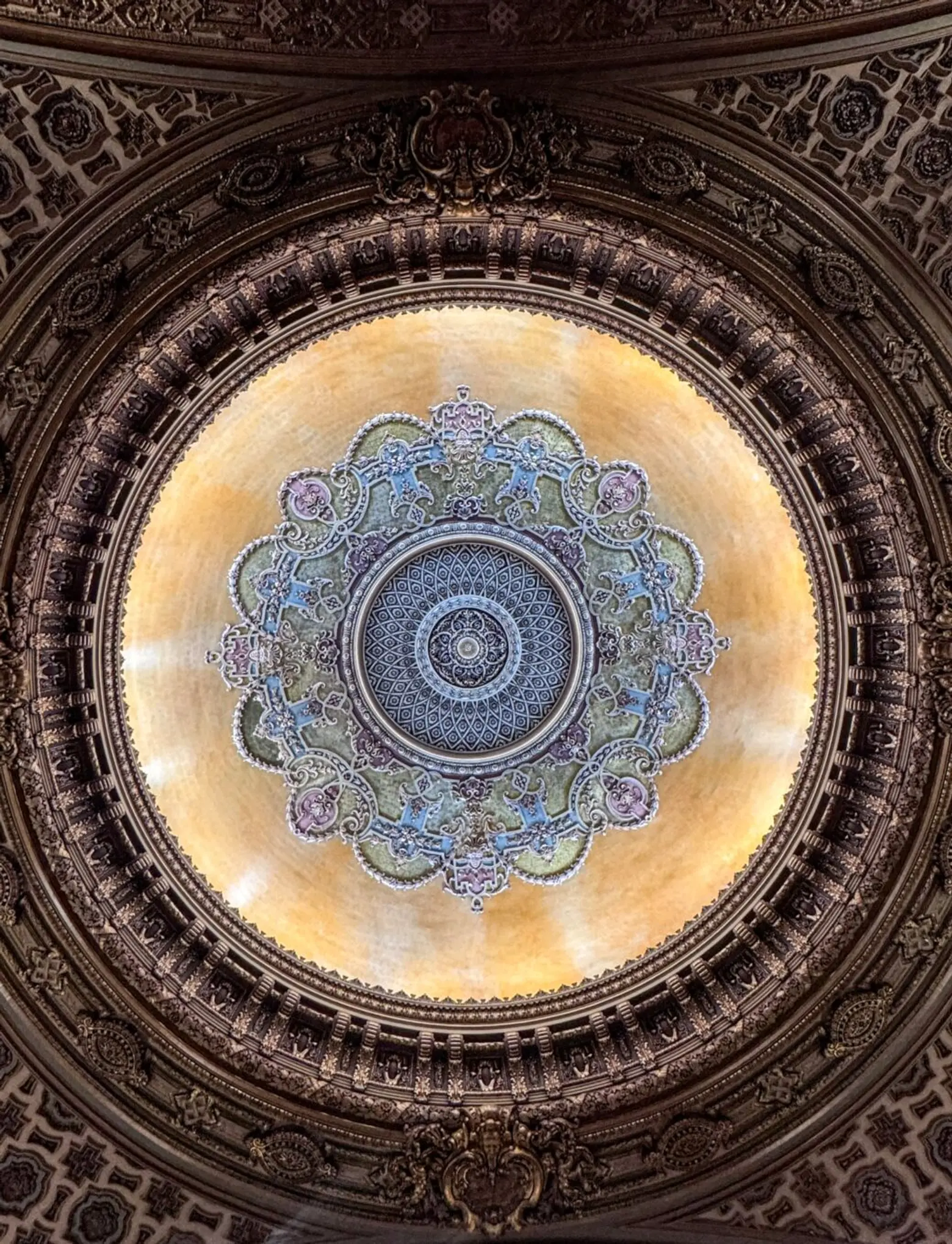
Jersey City’s opulent Loew’s Jersey Theatre, where Frank Sinatra is said to have found his voice, gleams once again in all its Roaring 20s glory. On Monday, 6sqft got a first look inside the historic Jersey City icon at its ribbon-cutting ceremony, marking the completion of a comprehensive, multi-year, $130 million restoration that was more than 40 years in the making. The theater, which once came close to facing the wrecking ball, is now a state-of-the-art venue. The Trey Anastasio Band kicks off the theater’s new era of live performances on Friday, November 13.
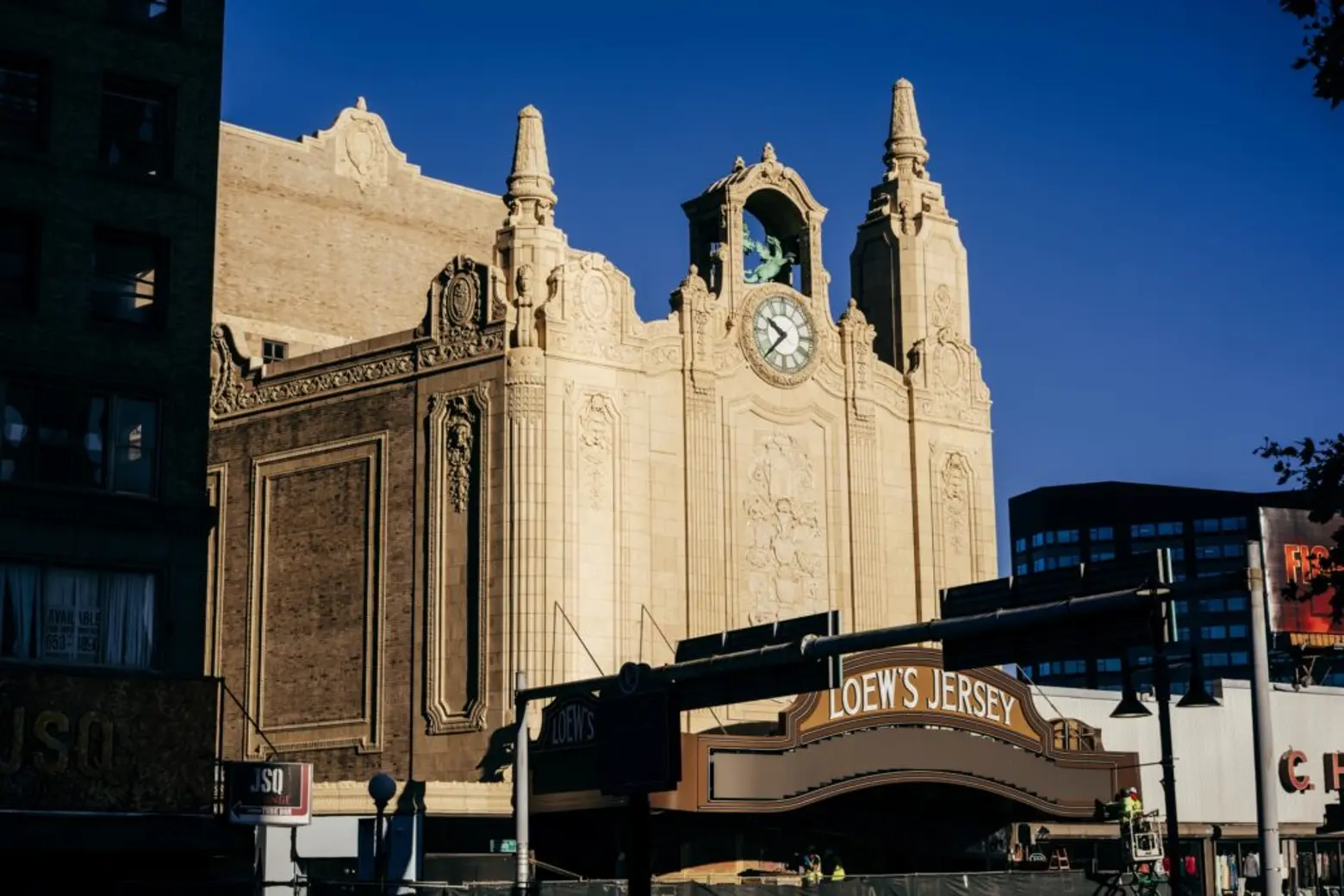
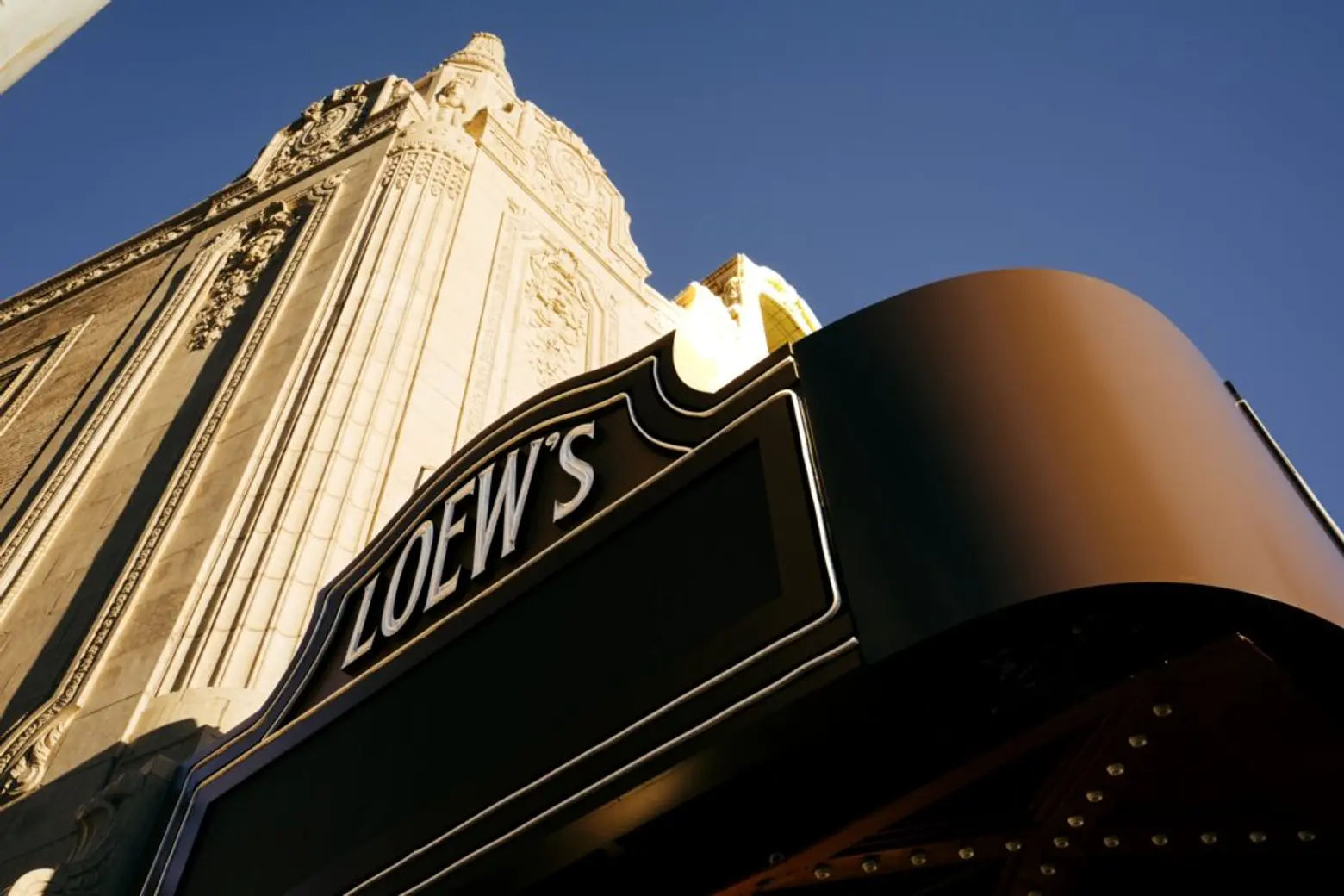
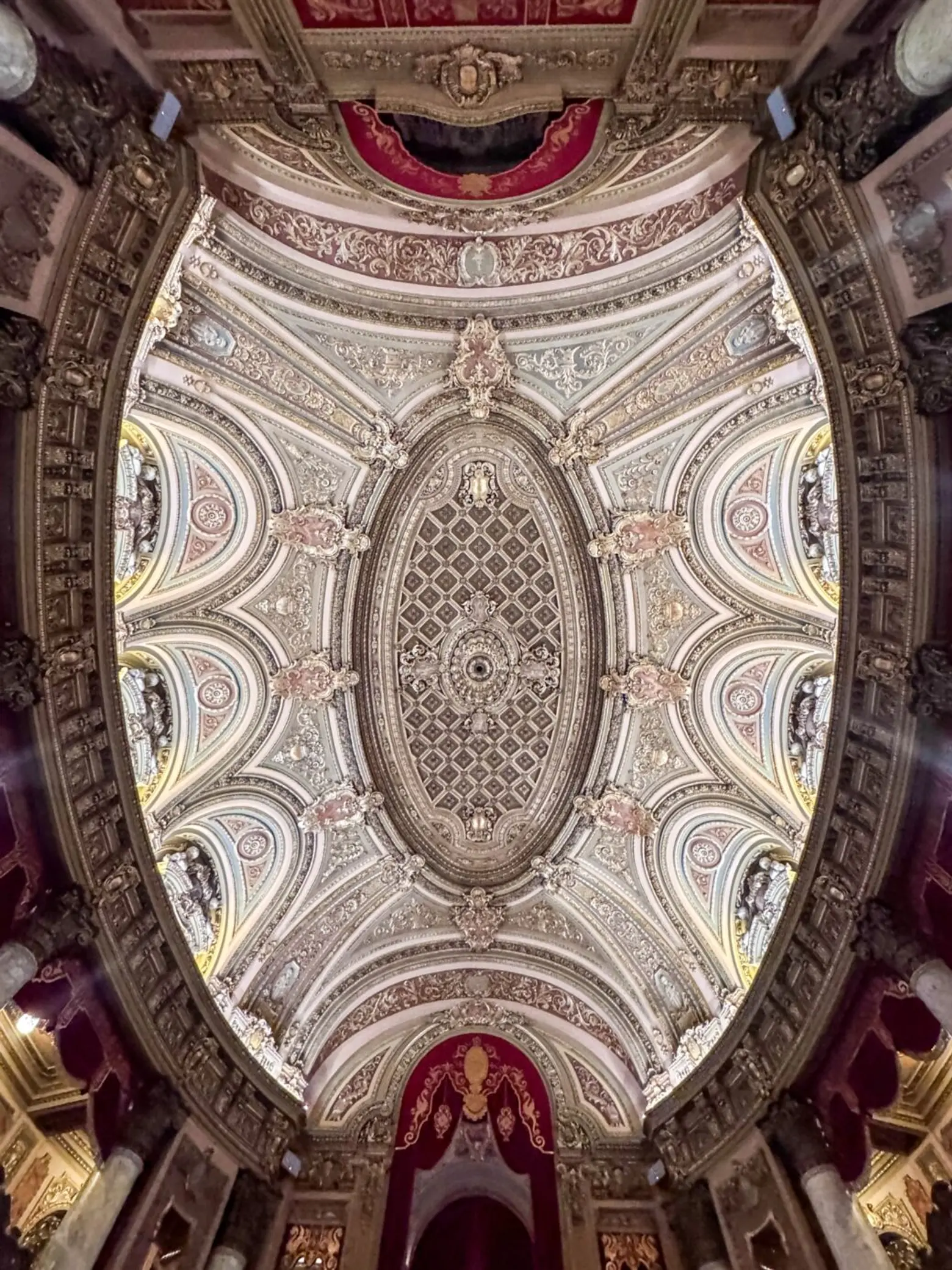
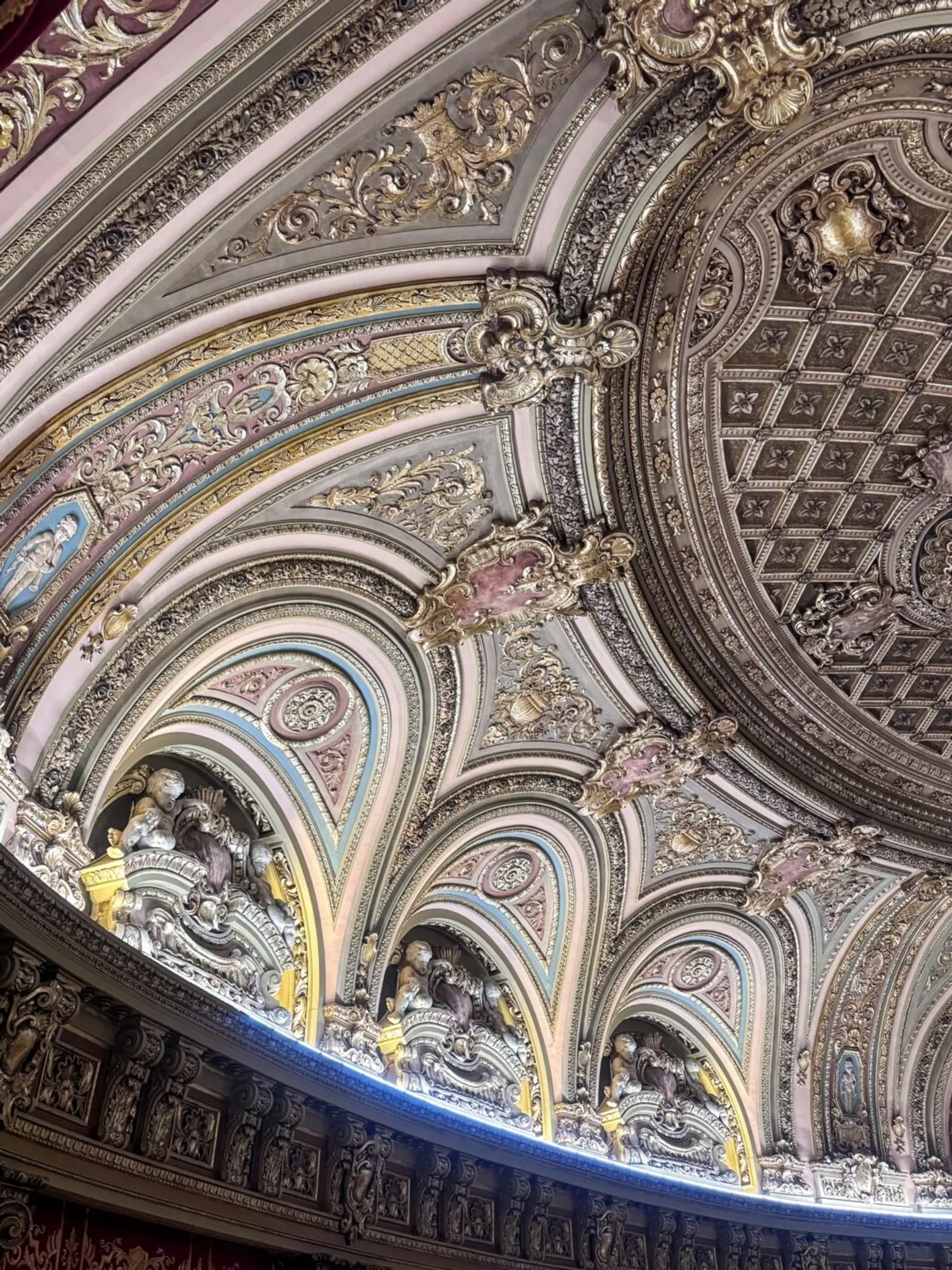
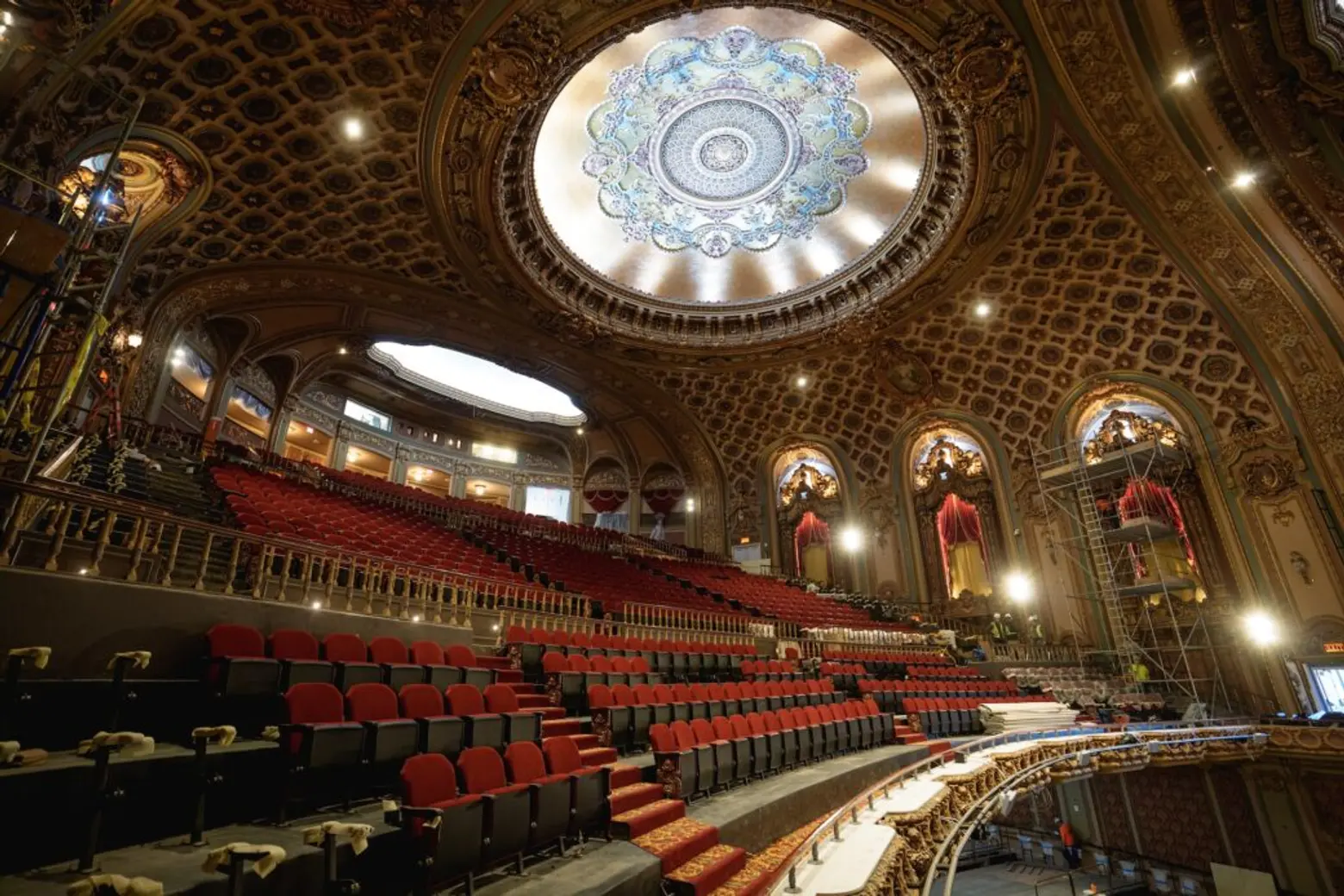
Designed by architect George Rapp in a gilded Baroque-Rococo style, the theater is one of five Loew’s Wonder Theatres built between 1929-30 across the tri-state area, along with the Loew’s Paradise in the Bronx, the Loew’s Kings in Brooklyn, the Loew’s Valencia in Queens, and the Loew’s 175th Street, now known as the United Palace Theatre, as 6sqft previously reported.
The grand movie palaces not only cemented Loew’s Corporation’s prominence in the film industry but also provided an escape for people from all walks of life, particularly during the Great Depression and World War II. Speakers at Monday’s ribbon-cutting ceremony referred to Loew’s Jersey Theatre as the “People’s Palace.”
In its earliest days, the theater hosted many of the era’s most famous performers. As legend goes, in 1933, a 17-year-old Frank Sinatra bought a ticket to see Bing Crosby perform on stage, an experience that Bruce Wheeler, the theater’s general manager, told NorthJersey.com, changed his life.
After serving as an entertainment hub for several decades, Loew’s Jersey Theatre became a movie theater in the 1970s. Although that period is now a distant chapter in the theater’s history, attendees at Monday’s press conference reminisced about the many hours they spent watching movies there.
Hudson County Executive Craig Guy recalled seeing iconic films such as “The French Connection,” “Shaft,” and “Jaws” at the theater, remarking that “so many iconic movies came through here.”
During the 1980s, the theater fell on hard times and nearly faced demolition. Pressure from grassroots preservation efforts spearheaded by the nonprofit Friends of Loew’s ultimately prompted the city to purchase the theater in the 1990s, allowing the organization to begin restoration work and operate it as a nonprofit arts center.
The restoration, however, would take decades to complete. In a 2018 interview, Colin Egan, executive director of Friends of Loew’s, said that although the city matched a $1 million state grant awarded at the start of the project, the combined $2 million still fell short of covering basic expenses, including restoring heat and making the bathrooms operational.
Due to the lack of funding, volunteers gradually restored the theater over weekend work sessions through 1996, taking on projects ranging from repairing mechanical and lighting systems to mapping every seat, scraping off old paint, priming, and repainting them.
By 2001, volunteers had completed enough work to partially reopen the theater for the first time in 15 years. Until its closure for restoration in 2021, it hosted live performances, events, and film screenings, as 6sqft previously reported.
A collaboration between the Jersey City Redevelopment Agency, the State of New Jersey, and Harris Blitzer Sports & Entertainment (HBSE), the project was initially estimated to cost around $40 million by former Jersey City Mayor Steve Fulop in 2020.
The following year, the city announced a $72 million agreement for the renovation. In May 2025, the city revealed that several project delays and rising material costs had nearly doubled the price tag to $130 million.
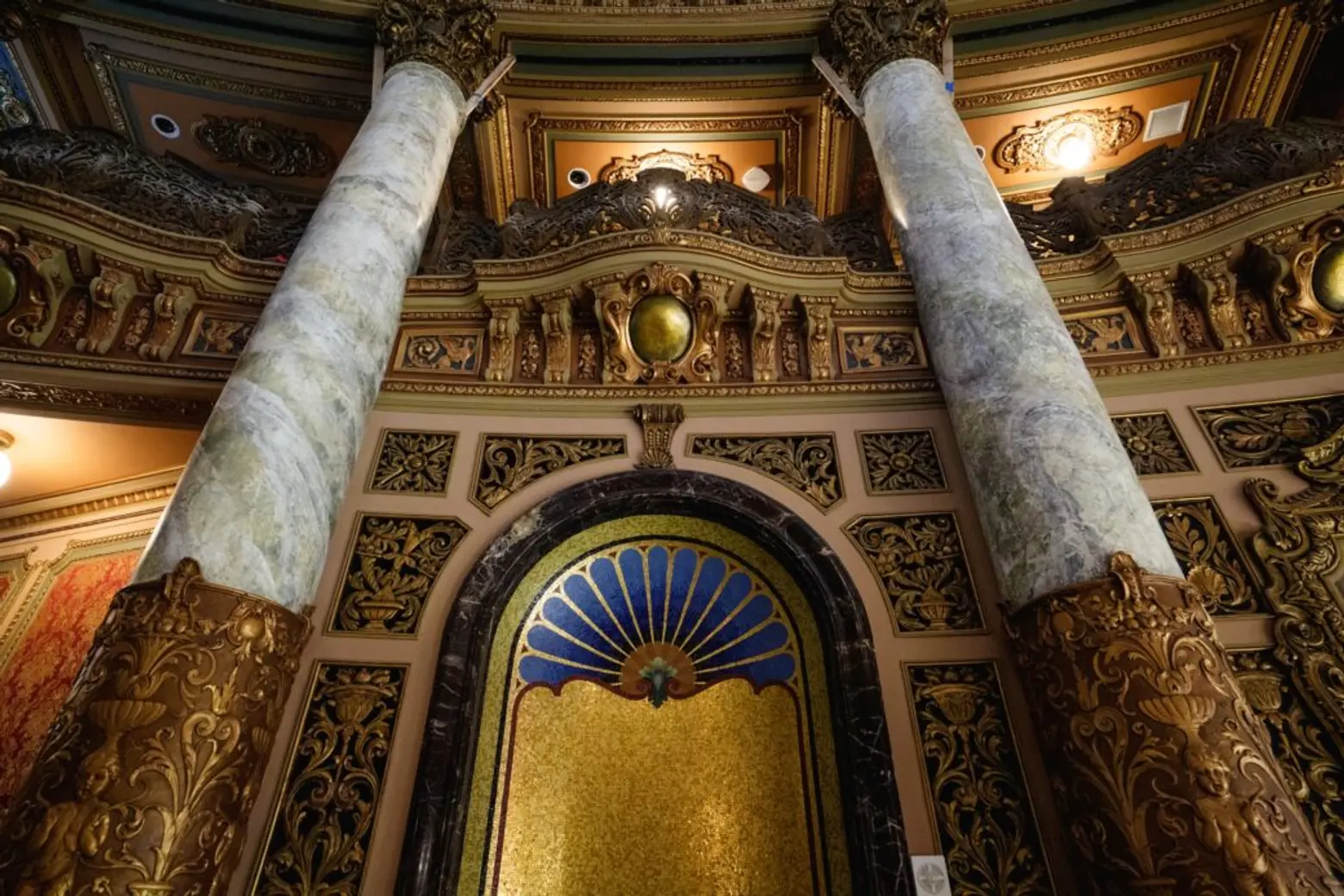
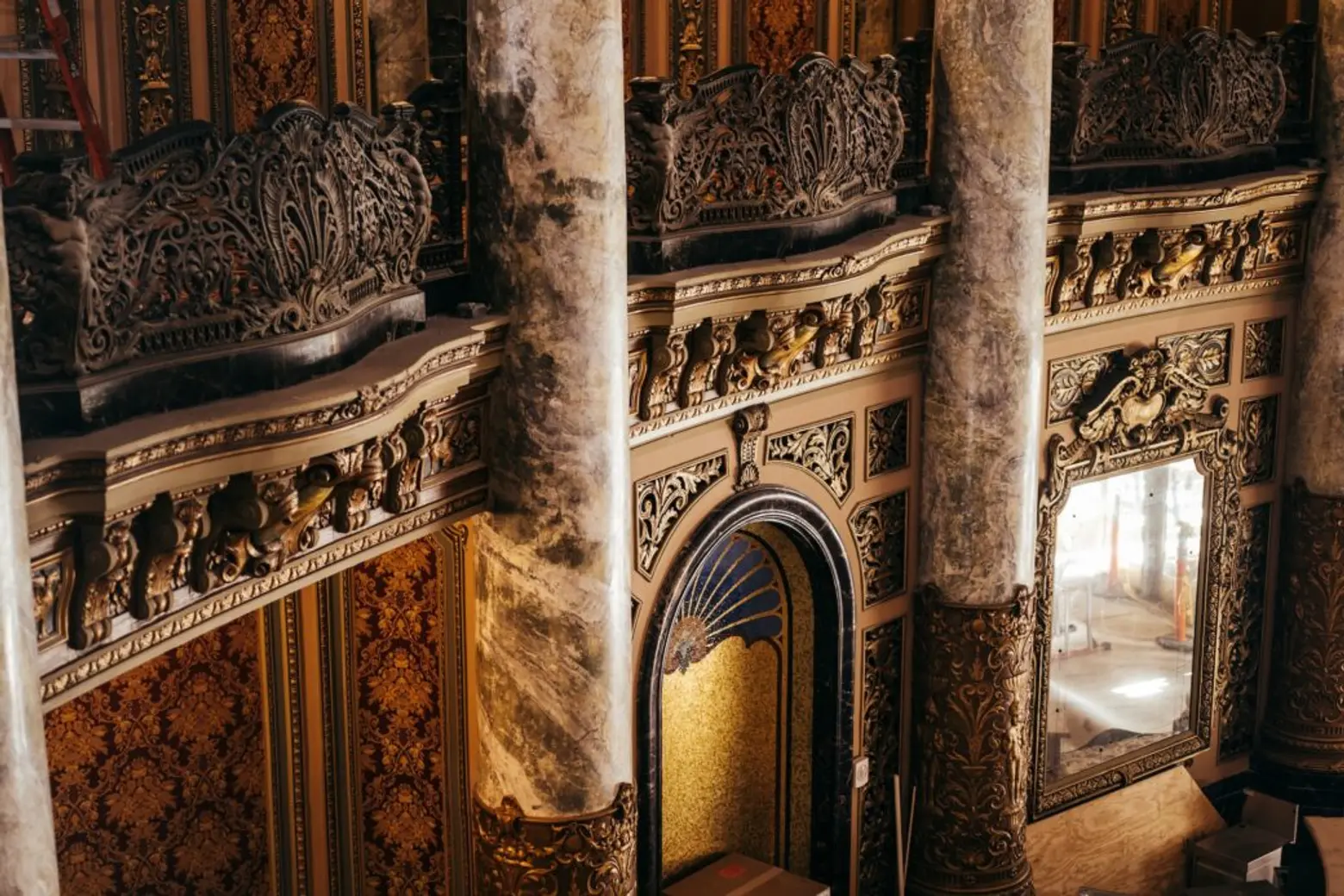
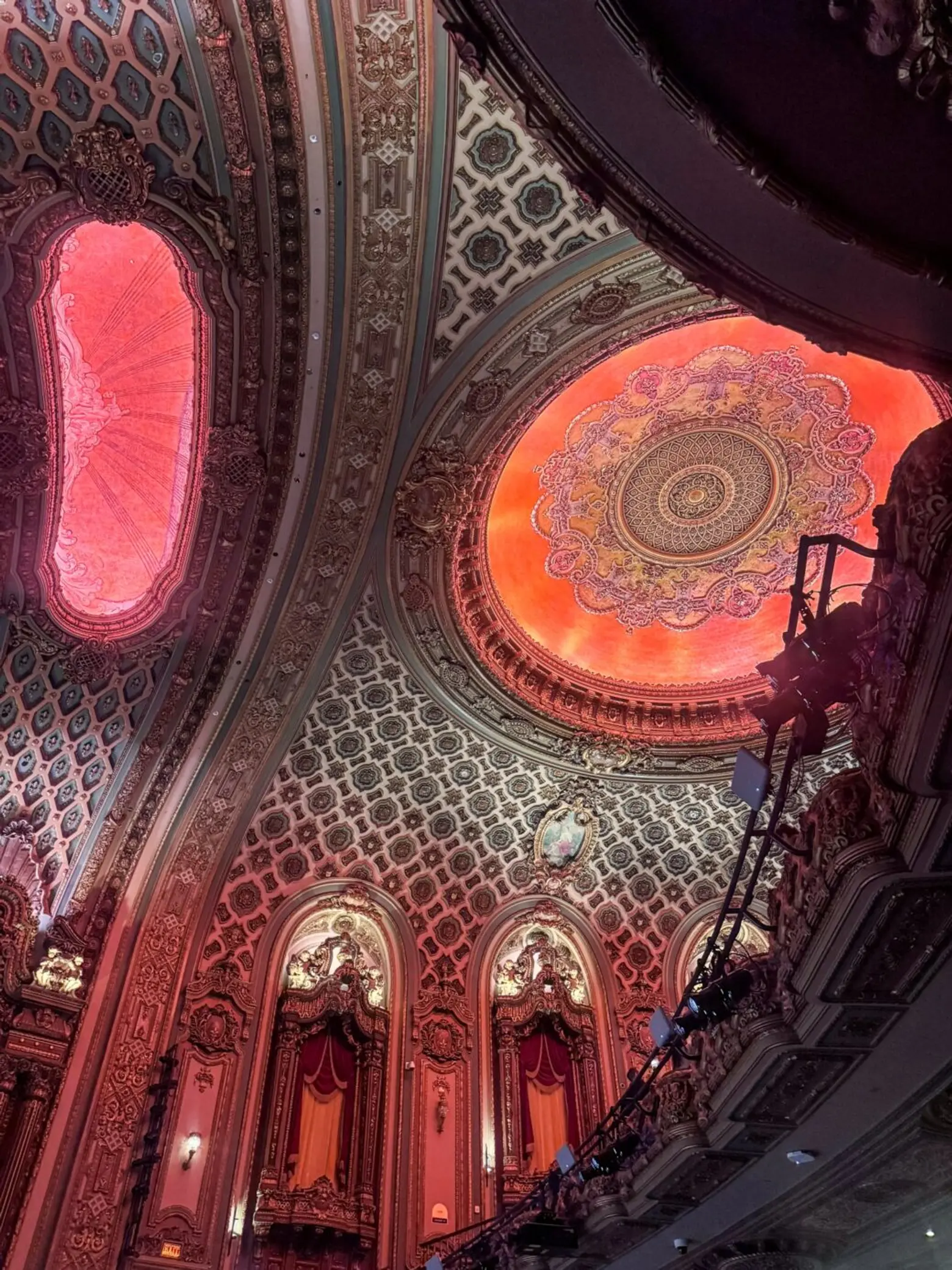
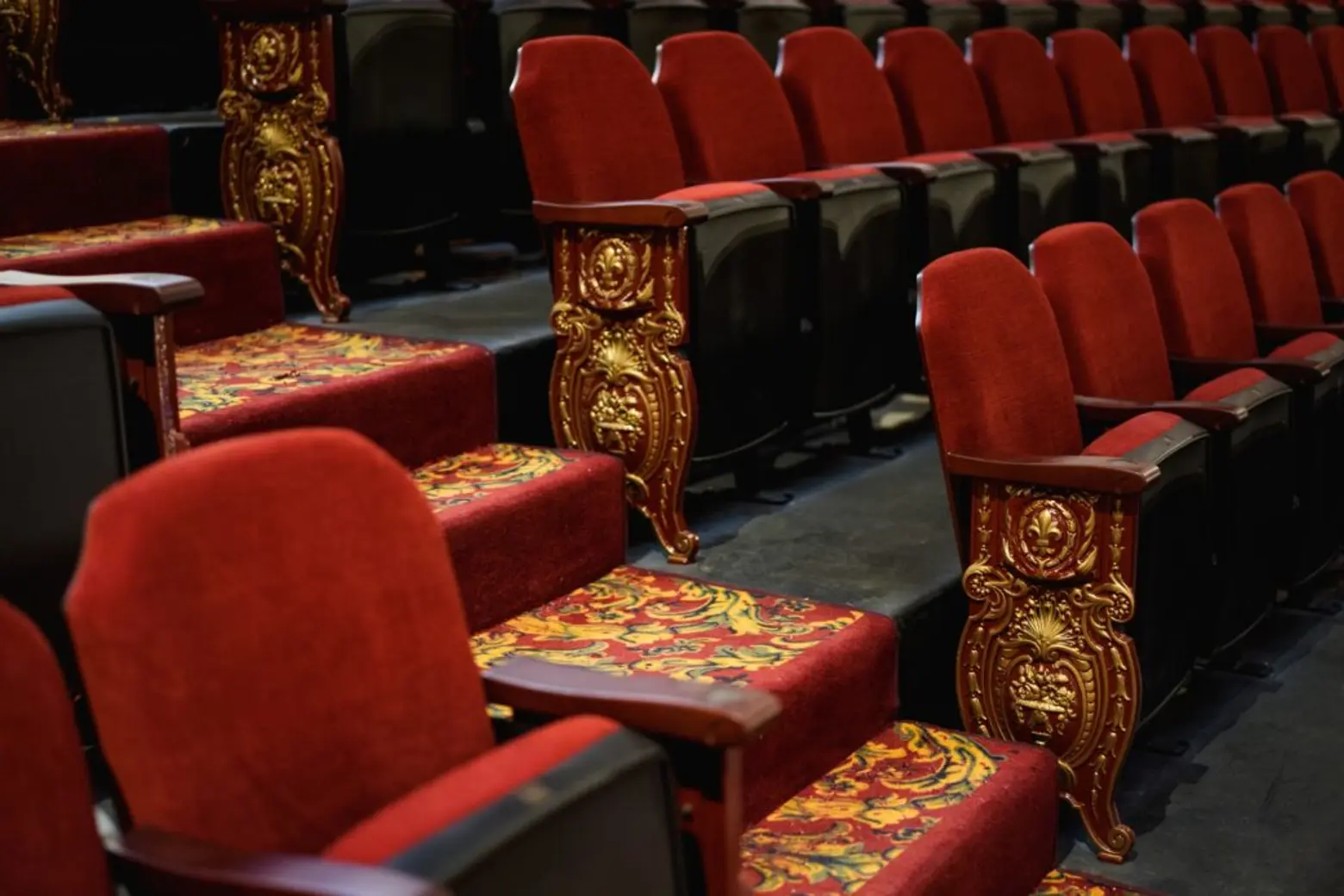
Despite years of delays and ballooning costs, the decades-old vision of restoring Loew’s Jersey Theatre to its former glory has finally come to fruition. OTJ Architects, working with Phelps Construction Group, meticulously restored and modernized the space while retaining its ornate historic details.
In the cavernous theater, new sound and lighting systems will ensure a top-of-the-line entertainment experience, while flexible seating for between 2,600 and 4,000 guests will accommodate a wide array of events, spanning music, movies, sports, community initiatives, and much more.
Loew’s Jersey Theatre’s transformation is the centerpiece of Journal Square’s revitalization as a cultural and economic engine for the city. The theater’s restoration received support from former Jersey City Mayor Steve Fulop, a commitment that has continued under Mayor James Solomon, who views the project as a way to drive the neighborhood’s renaissance and expand access to the city’s diverse communities.
“The Loew’s really, for me, represents two things: The first is returning Journal Square as the heart of Jersey City. This should and can be the cultural capital of the city,” Solomon said during Monday’s press event. “We want Journal Square to really be a location where people go for arts, entertainment, and food. This is going to be the return of the centerpiece of the renaissance of Journal Square.”
“I love the phrase that this theater is a ‘palace for the people.’ It truly is a special place. We are one of the most diverse cities in the country, and that means every community is going to find a place here.”
Emphasizing his administration’s commitment to ensuring the revitalized Loew’s Jersey Theatre is accessible to all, Solomon announced that the theater’s first community program following its reopening will be the return of the Mayor’s Holiday Concert, which will open the theater’s doors to the community for free on December 2.
Loew’s Jersey Theatre is part of a broader resurgence of historic theaters across the tri-state region. In recent years, several prominent venues across New York City, including the Brooklyn Paramount, which also served as a world-class performance venue in its heyday, have undergone major restorations, bringing these long-neglected landmarks back to life.
Several of the other original Wonder Theatres remain in operation today. According to the New York Times, a new nonprofit recently signed a long-term lease for the Bronx’s Paradise Theater and is working to raise $50 million for its renovation. Kings Theatre in Flatbush underwent a comprehensive renovation and reopened in 2015.
These projects, which involved multimillion-dollar revitalizations, have also been framed as ways to strengthen the cultural identity and economic vitality of the neighborhoods surrounding them.
While the bulk of the project is complete, some secondary features are still being worked on. Wheeler told NorthJersey.com that the grand lobby’s iconic chandelier will return in the coming months, along with the theater’s famed organ, both of which are currently undergoing repairs.
The theater will celebrate its grand opening this weekend, hosting the Trey Anastasio Band on Friday, followed by The War on Drugs on Saturday. Jodeci will perform on Wednesday, November 18, while comedians Chelsea Handler, Jeff Dunham, Gary Owen, and Jimmy O. Yang are scheduled to take the stage throughout December and January.
6sqft spoke with Wheeler about the painstaking restoration process, the influence of Rapp’s original designs, and the project’s broader impact on Journal Square’s cultural scene.
6sqft: Restoring and modernizing these older theaters while preserving their historic aesthetic is an incredibly hard task. How did the project team balance those priorities? Were there any obstacles that proved particularly challenging?
Wheeler: There certainly were. Whenever you’re uncovering parts of what is now a 97-year-old building, contractors and specialists who come in, whether they’re working on electrical or plumbing systems, heating and air conditioning, or whatever it might be, are sometimes speculating.”
They’ll say, ‘Oh, what’s behind the wall should be this.’ Quite often it is, and quite often it’s not. So when they get some of these areas uncovered, it’s about, ‘Well, how do we do this? How do we get this equipment hung in the spots where we want it to go?’ All of that has to be done in a way that ensures it’s safe.
Number two, we want it to be aesthetically pleasing, and number three, it has to be functional. You can’t put speakers in a place like this just anywhere. It has to be strategic.
In what ways did George Rapp’s original design and the architectural character of the Wonder Theatres influence the approach to the restoration? Were there particular original features that the project team was especially committed to preserving?
The short answer to the question is all of them. As you can look around, there was meticulous research done on the specific colors, fabrics, and details. The real challenge was trying to meet or exceed where those things are.
We look at some of the soft goods that are up here, like the curtains. Back in the day, they weren’t necessarily fireproof. In order for us to operate properly, all of these things need to be done in a particular way. The theater is now fully sprinklered, though I challenge you to look up and find them.
“The reliefs and the cherubs and all of the other artwork, a lot of it was covered in coal dust and tobacco residue. This theater, at least into the ’50s or ’60s, was coal-heated, and people were allowed to smoke inside. All of that stuff built up, so there was quite a bit of residue that was stripped away so they could get down to the original plaster and do the restoration work.”
In recent years, there have been several other historic theaters across New York and New Jersey that have undergone major restorations—King’s Theater in Flatbush, the United Palace in Manhattan, and the Brooklyn Paramount. Did those projects provide any guidance or lessons for the restoration of Loew’s Jersey Theatre? Were there particular approaches you looked to?
I’m sure they [the architects] did. I think it’s wonderful that investments are being made in these older performance spaces and theaters. So many of them are cornerstones of the communities where they were built and opened, and we feel really good that we have the opportunity to come in and do that with this one. Jersey City is really looking forward to being an anchor for the neighborhood.
What impact do you think the theater’s opening will have on the broader Journal Square and Jersey City cultural scene?
Journal Square has a number of neighborhoods that have gone through a bit of a renaissance, down in the Newport area near the river, the Grove Street area, and now really the focus is here at Journal Square.
It’s really about having a great performance space, but it’s also about the investment that’s made in bringing people back and bringing revenue into the neighborhood. Not just for the theater, but for restaurants, shops, bars, rideshare and public transportation services, parking, and all those things. The old phrase is, ‘A rising tide lifts all boats.’ The city is very interested in the theater being a catalyst for that.
RELATED:
Source link