 In 2014, while fulfilling its obligations under (the soon to be gutted) Section 106 of the National Historic Preservation Act during a utility project, the National Park Service (NPS) discovered the first battlefield surgeon’s burial pit ever excavated and studied at a Civil War battlefield and the remains of three US Army soldiers, one of them from New York.
The discovery occurred at Manassas National Battlefield Park (the park uses the Confederate name for two important battles fought there, the First and Second Battles of Bull Run). Earlier archeological testing had identified nothing significant, but during installation, archeological monitoring unearthed several small fragments of bone.
The NPS does not attempt to find human remains, but when they are discovered the National Historic Preservation Act and related laws guide that response, which differs depending on whether the remains are recent, historic, or those of Native Americans.
At first, no one knew what the fragments were or how old they were. The NPS sent them to the forensic anthropology lab at the Smithsonian Institution’s National Museum of Natural History, where researchers determined they were human and dated to the Civil War.
A recovered femur had been sawed off, consistent with an amputation. Because these remains lay close to the surface and were subject to erosion and other processes that may threaten their integrity, the NPS determined that further excavation was needed to study and preserve this rare find.
In 2015, archeologists from the NPS and the Smithsonian removed the earth in a grid pattern, inch by inch, layer by layer, carefully recording every find and its precise position. Knowing exactly where a bone lay helps scientists understand how the remains were placed and whether damage occurred before or after death.
Bloody Battlefield Hospitals
Beneath the surface lay two nearly complete human skeletons and an assemblage of 11 amputated arms and legs, along with artifacts including buttons from a US Army sack coat, a .577-caliber Enfield bullet, and three pieces of .31-caliber lead buckshot.
 Typically, these pits held only amputated limbs, so the discovery of two whole interments was unexpected. To learn more about who these bones belonged to, the NPS collaborated with the Smithsonian’s Physical Anthropology team.
Once the remains were moved to the Smithsonian’s lab, physical anthropologists began analysis. They analyzed the soldiers’ bone chemistry in an attempt to determine generally where they came from.
Carbon, nitrogen, and oxygen isotopes showed that both men had consumed food and water from northern latitudes. Together with the sack coat buttons, this evidence helped identify the remains as those of US Army soldiers. Their teeth, joints, and bone structure revealed their ages and likely causes of death.
The first was a man in his late 20s, killed by an Enfield bullet to the upper leg. The bullet was still lodged in his femur, likely because it slowed as it passed through his cartridge box.
The second, a man 30 to 34 years old, died of a buck-and-ball shot (a military musket load combining one large lead ball with several smaller buckshot pellets) to the upper arm, pelvis, and leg.
Both reached the field hospital but appear to have died before they could be operated on, which may be why they came to rest among the amputated limbs.
Because these field hospitals sat close to the fighting, the staff there may have had to evacuate quickly, intending to move the remains, either to bring them home or inter them elsewhere. We may never know for certain, but the circumstances give experts a window into the chaos of the Second Battle of Bull Run.
The battle in Prince William County in Northern Virginia was fought August 28–30, 1862 and ended in victory for the Confederate Army. According to the American Battlefield Trust, 1,747 United States soldiers were killed during the battle and 8,452 wounded. Another 4,263 went missing or were captured.
After the battle on September 5, 1862 Robert E. Lee continued his campaign against the United States by crossing the Potomac River into western Maryland and heading north toward the US capital at Washington, DC.
On September 17, Lee’s army and United States Army met at the Battle of Antietam, the costliest single day of fighting in American history. In all 2,108 US soldiers were killed, 9,540 wounded, and another 753 missing and captured. Doctors at the scene are overwhelmed.
Badly needed supplies were brought in by nurse Clara Barton (1821-1912), who had been educated at the Clinton Liberal Institute in Oneida County, NY. She would go one to found the American Red Cross on August 22, 1881 in Dansville, Livingston County, NY, where she maintained a home.
The Unidentified New York Soldier
After the men were identified as United States soldiers, the Army offered them a permanent resting place at Arlington National Cemetery. On June 19, 2018, the NPS transferred the remains and the 3rd U.S. Infantry Regiment, “The Old Guard,” moved the soldiers to Arlington to await interment.
Ahead of the interment ceremony, an NPS historic preservationist and two volunteers built coffins using wood from a wind-felled oak that had grown on the battlefield were they fell. The coffins followed an old-fashioned “toe-pincher” design, wider at the shoulders and narrowing toward the head and feet, and the remains were wrapped in reproduction Civil War blankets.
On August 18, 2018, they were finally laid to rest at Arlington, honoring their memory and the sacrifice they made fighting those who sought the destruction of the United States from within its own borders.
When the 2015 excavation ended, archeologists already knew that additional amputated bones were still in the ground. They paused to make a plan and coordinate with stakeholders under Section 106 of the National Historic Preservation Act.
 In March 2024, nearly ten years later, an NPS team returned to finish the work. Ground-penetrating radar surveys conducted in 2016 had suggested more limbs were present, and the team worked through the soil with the same meticulous care as before, recording the depth and position of every find on field forms and screening the dirt so nothing was lost.
They soon realized they had uncovered not only several limbs, but another complete human skeleton. The team ultimately recovered several amputated limbs, the third soldier’s remains, and artifacts including a number of United States Army coat buttons and a rubber pocket comb.
Once the excavation was complete, physical anthropologists cleaned, cataloged, and organized the finds and applied the same analysis used before: bone growth patterns, dental evidence, signs of wartime trauma, and chemical testing.
About 164 years later, that analysis allows the NPS to tell this soldier’s story. He was a young man, roughly 15 to 19 years old and slight in stature, between 5 feet 1 inch and 5 feet 3 inches tall. New York Excelsior jacket buttons, identifiable by their shield and eagle design, confirmed he was a US soldier from New York.
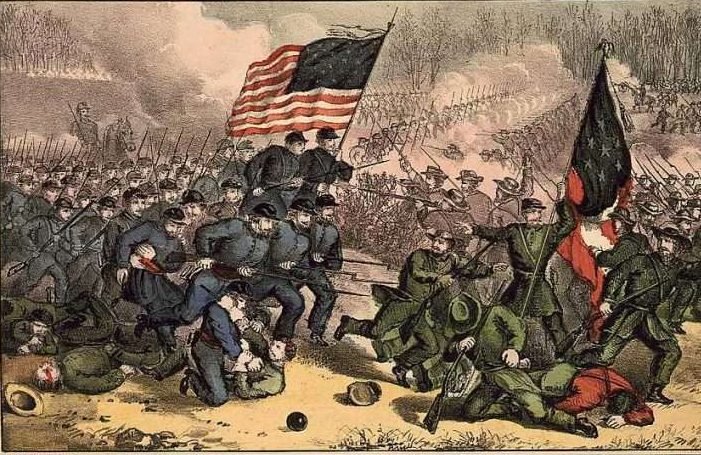
On August 30, 1862, the day all three men were likely wounded, United Stated troops were ordered across an open field into crushing artillery and withering infantry fire from an elevated, entrenched Confederate position.
A piece of case shot lodged in his upper chest points to his cause of death: long-range Confederate artillery during the Second Battle of Bull Run. Case shot was designed to explode above enemy troops. He may have been struck on the field and died on the way to the hospital, or shortly after reaching it.
Dozens of US infantry, cavalry, and artillery regiments from New York saw combat during the Second Battle of Bull Run.
In time, isotopic analysis may provide clues about where this New Yorker he grew up. Like the other two soldiers, his interment in the surgeon’s limb pit was unusual.
Matching service and surgeon’s records, which often noted a soldier’s name, regiment, and injury, to all these identifying characteristics may one day reveal exactly who he was. DNA analysis could speed this process, but NPS refuses to identify this man using it.
 The soldier could possibly have immediate, or near immediate descendants still living. The last living confirmed veteran of the Civil War was Albert Woolson (1850–1956) who was born in Antwerp, in Jefferson County, NY.
Remarkably, the last confirmed widow of a Civil War soldier, Helen Viola Jackson (1919–2020), died only six years ago on December 16, 2020, at age 101 in Missouri. She was one of four confirmed widows who survived into 21st century.
“There are ethical issues with conducting DNA testing on remains without the consent of descendants,” the NPS says. “Unlike modern clinical research, where participants provide informed consent, historic and ancient individuals cannot give permission for their bodies and genomes to be studied.”
“Since we don’t know exactly who these individuals are, we also cannot seek permission or support from descendants, who may or may not want DNA testing done. Finally, storing genetic information in semipublic or commercial databases can raise privacy and data security concerns,” they said.
The NPS will conduct stable isotope analysis and historical research on the New York soldier’s remains and the amputated limbs (as it did for the 2015 finds) that, they hope, will help identify who he was.
Read More About Civil War & New York State
Illustrations, from above: “Second Battle of Bull Run,” (aka Manassas) by Currier & Ives; a .577 Enfield bullet lodged in a portion of femur bone found in the limb pit; (Smithsonian Institution / Kate D. Sherwood); The 2024 excavation (NPS / Nathan King); and the Excelsior button found in 2024 (NPS / Kelsey Graczyk).
Source link