I get a steady stream of press releases about affordable housing groundbreakings and ribbon-cuttings. But when I ask about the cost, the answer isn’t something to celebrate: $700,000 to $900,000 per unit, even with free land from the government.
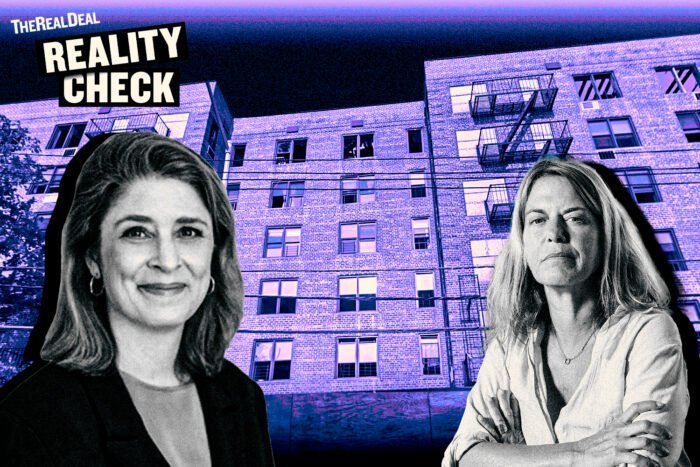
So I was surprised when Alicia Glen told me her firm’s 134-unit project in East Flatbush has a $62 million budget, or $463,000 per unit. Not bad for a gut renovation of a violation-ridden building vacant since a 2012 fire. It wasn’t even free; MSquared bought it for $6.4 million and spent about $1 million resolving lawsuits by tenants and the city that it inherited.
It helped that the city treated the former deputy mayor as an honest broker and didn’t play hardball in settling its lawsuit. Its priority was bringing the building back, not collecting every penny of the old fines and violations.
Compare that to a Manhattan Legal Services lawyer’s plan for the next buyer of the decrepit Dawnay Day portfolio. “Whoever the new owners are, we’re prepared to sue the living bejeezus out of them on day one,” Matthew Latterner told Gothamist.
Something else is unusual about the redevelopment of 665 New York Avenue: the income mix.
Multifamily projects in the city almost always use one of two models. An 80/20 is 80 percent market-rate, 20 percent affordable (or at least 25 affordable if on upzoned land), and uses a tax abatement, formerly 421a and now 485x. The other choice is 100 percent affordable, using subsidies and other funding sources such as Low Income Housing Tax Credits.
Both have drawbacks.
Tax-abatement projects don’t pencil out in neighborhoods where market rents are not strong enough to offset losses from affordable units. Affordable projects take years longer and cost more to build, consume subsidies and concentrate poverty in struggling neighborhoods.
It’s a Goldilocks problem. There’s no middle ground.
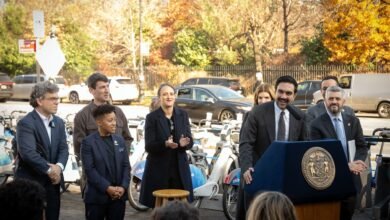
Glen’s deal, which was announced by the Mamdani administration (without the cost, for some reason), is tailored to its circumstances. It doesn’t try to fit a square peg into a round hole.
“We’re hoping this will be a model for mixed-income housing,” Glen said.
Here are the elements that made it work:
- Two-thirds of units are affordable — more than 485x, less than traditional affordable housing. Of the 90 below-market units, 14 will go to the homeless and 18 to tenants who had to vacate after the fire. They’ll pay what they were paying before, as little as $300 to $400 a month. The low rents persuaded the Department of Housing Preservation and Development and local Council member Rita Joseph to give it Article XI, limiting its property taxes to about 5 percent of rental income (instead of the usual 25 to 30 percent) for 40 years.
- The homeless families will be screened and selected by local nonprofit Settlement Housing, not the Department of Homeless Services. That means faster filling of units, so every vacancy doesn’t mean several months of rent lost to bureaucracy.
- The income-restricted units, filled through the city’s housing lottery, will be affordable to households earning as little as 50 percent of the area median income, but 55 of the 90 will be 105 percent AMI units, which generate some profit. That’s better than some HPD term sheets offer.
- Its capital stack is simple: 60 percent is debt from Citibank, 15 percent is a 6.5 percent loan from the Housing Development Corporation and the rest is equity from MSquared. Affordable projects usually have a patchwork of six or more funding sources, each with its own rules, fees and delays. “From start to finish, we were about 12 to 14 months,” Glen said. “The average for New York City affordable housing for a similar building is at least a three-year wait. That’s a lot of carrying costs just getting added to the project.”
- MSquared has investors willing to accept net returns of 11 to 13 percent, given that affordable housing has less risk of vacancy. “There are investors out there who understand that,” Glen said. Investors in market-rate projects might demand twice that return.
- Glen is saving money by using the original facade and foundation rather than starting from scratch as 485x projects do. She also doesn’t have the high labor cost and audit risk of 485x projects with more than 99 units.
The usual HPD-subsidized, low-income project would have cost the city $250,000 to $300,000 per unit in subsidy, said Glen, who oversaw the agency during most of the de Blasio administration. Article XI will cost taxpayers far less and put a roof over New Yorkers’ heads much faster.
“One of the things we hope this project shows — and we hope the city embraces — is that Article XI does not require city subsidy like LIHTC,” said Glen. “We don’t need your money. We need your tax exemption authority.”
The New York Avenue project puts private capital to work with just enough assistance from the city for it to pencil out without being bogged down. Glen credited HPD Commissioner Dina Levy with sparing it from cumbersome processes.
“Dina has been really wonderful in working with us on those maddening details,” she said. “Remove all of the extra stuff that makes everything take forever. Time kills deals.”
Read more

The slowest, costliest way to build affordable housing
For richer or poorer: The hidden cost of low-income housing

Educating Zohran: What nonprofit housing actually costs