 More than 70 years after renowned lichenologist Mason Hale (1929-1990) first surveyed the lichens of Aton Forest in northwestern Connecticut, researchers returned to the same site to conduct a rare direct comparison between historical and modern ecological conditions highlighting how changing forest cover impacts local biodiversity.
“Studies like this show the extraordinary value of preserving scientific specimens and returning to sites that previous generations so meticulously documented,” according to Dr. James Lendemer, Curator of Botany at the New York State Museum a co-author of the study.
“These studies help us better understand the relationships between species and their environments, and why documenting biodiversity today matters for future research.”
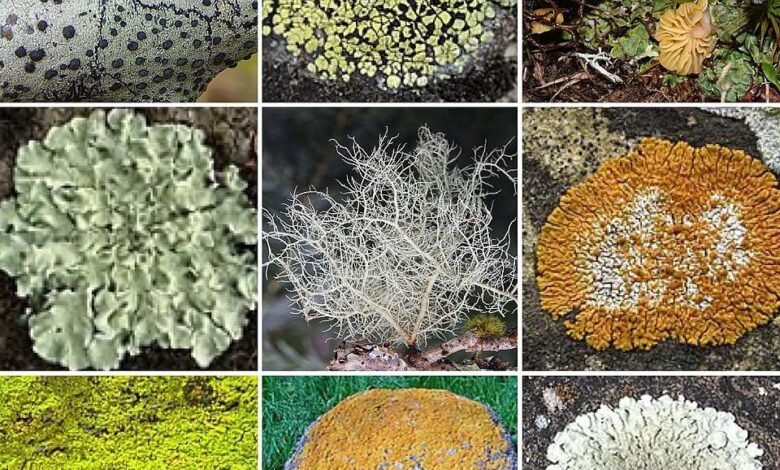
A lichen is not a single organism, plant, or moss. Instead, it is a complex composite lifeform formed by a symbiotic partnership between a fungus (the mycobiont) and one or more photosynthetic partners (photobionts), such as green algae or cyanobacteria, alongside supporting yeast and bacteria.
Researchers have found that the lichen community has changed dramatically over the last 70 years. As forest cover increased, conditions became shadier, favoring lichen species adapted to lower light levels.
Meanwhile, species associated with open habitats that receive full or nearly full sunlight declined. Although the researchers identified changes in the forest cover as a likely explanation, they noted additional research is needed to establish the precise cause of changes to individual species.
Key findings of the study nclude:
A combined total of 250 lichen species were documented across both historical and modern surveys;
Hale detected 60.4% of the total species in 1949, while the modern team detected 73.6%; and
Only 85 taxa from Hale’s original baseline were relocated during the modern study, a statistically significantly difference.
They also used aerial imagery to evaluate 70 years of local forest cover changes and re-evaluated Hale’s original specimens.
Similar resurveys have yet to be conducted in New York because the lichens of few comparable sites have been studied in such detail as Aton Forest.
Lendemer believes the findings likely reflect trends throughout the Northeast, including in the Hudson Valley where previously farmed land has been reforested.
By collaborating with partners in neighboring states, State Museum researchers can better understand not only what is happening in New York but also how it relates to the region on a larger scale.
Prominent American lichenologist Mason Hale served as curator of lichens at the Smithsonian Institution’s National Museum of Natural History for 33 years.
He was the author of Biology of Lichens, the first comprehensive introductory treatment of lichens in English, and How to Know the Lichens, the standard field guide for North American lichens.
Mason helped build what became one of the largest lichen collections in the world at the Smithsonian. He specialized in large lichen families such as Parmeliaceae and Thelotremataceae, as well as baseline studies on lichen growth rates and lead pollution measurement.
He published over 150 scientific studies and five books, and the Mason Hale Award is presented in his honor for lichenological research.
Hale began his scientific career as an undergraduate at Yale University in 1949. His early work at Aton Forest documented more than 150 lichens and included detailed observations of their ecology.
He also collected specimens and established permanent research plots, creating a valuable historical record that researchers could revisit decades later.
The field station at Aton Forest stewards 2,500 protected and forested acres in Norfolk. It focuses on long-term scientific study of vegetation succession and ecosystem health. In 2026, it celebrated its centennial year.
Billy Gridley, President of Aton Forest, said, “Our founder Dr. Frank Egler pursued ‘long-term, low-cost, low-impact’ interpretive ecological studies here for 70 years and would be thrilled by this important follow-on study.”
The study, “Resurvey after 70 years reveals significant changes to the lichens of Aton Forest, Connecticut,” was published in October 2026 in The Journal of the Torrey Botanical Society. In addition to Lendemer, it was co-authored by Christopher R. Mangels, Steven N. Messier, and Nels E. Barrett.
Lendemer delivered a lecture on the study in July at the State Museum. You can find a video here and the presentation deck here.
Read About Lichens in New York State
Illustration: A collage of lichen growth forms, including crustose, placodioid, foliose, fruticose, leprose — and an mushroom-like basidiolichen (top right) — illustrate the wide morphological range that a single fungus-plus-alga partnership can assume — demonstrating the diversity that lichen systematics organizes.
Source link