 A round-up of what you may have missed from last week’s New York Almanack. Please support New York Almanack’s year-end fundraising today.
History
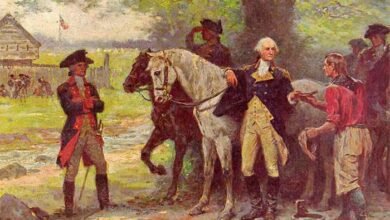
Queensbury During the American Revolution. Drawn from James Austin Holden’s 1906 essay “The Half-Way Brook in History,” edited and annotated by John Warren, this piece traces the brook on the Lake George road where Riedesel’s troops camped in 1777, Burgoyne’s defeated army was escorted after Saratoga, and Carleton’s 1780 raid brought “the year of the great burning.”
The 1775 Invasion of Canada: A Cautionary Tale. Anthony F. Hall of the Lake George Mirror weighs the views of Rick Atkinson and Eliot A. Cohen on the failed campaign and recalls that Fort George became a smallpox hospital with about 2,000 patients by August 1776.
The Mohicans & The Arrival of Europeans. In an essay first written for the Williamstown Historical Museum, Lauren R. Stevens describes a Mohican alliance of up to 40 villages with a council at Schodack, early trade with the Dutch at Fort Nassau and Fort Orange, and the Mohawk-Mohican War of 1624 to 1628 that began their decline.
LGBTQ+ NYS History Context Project Report Issued. The Preservation League of NYS released its statewide LGBTQ+ historic context study, with guidance from nine regional preservation groups, and recommends an LGBTQ+ Historic Sites Action Plan and an LGBTQ+ History Action Fund as next steps.
Natural History
NYS Acquires Former Shoreham Nuclear Power Plant Lands. DEC paid National Grid $28.25 million for nearly 750 acres around the abandoned Suffolk County plant, including 100-foot bluffs, pine barrens and more than 40 acres of tidal marsh, and plans parking, trails and beach access.
Moss Lake Preserve’s Rare Kettle-Bog. The Nature Conservancy’s 82-acre preserve near Houghton in Allegany County, a National Natural Landmark, surrounds a 15-acre bog lake formed about 15,000 years ago, with pitcher plants, sundews and a 150-foot boardwalk.
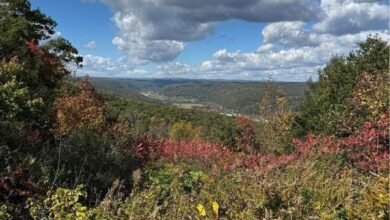
Former Pinnacle State Park Now McCarthy Hill State Forest. More than 700 acres of the former Steuben County park, whose nine-hole golf course closed in 2017, have moved to DEC, bringing McCarthy Hill State Forest southwest of Corning to 1,510 acres with 11 miles of trails, including part of the Finger Lakes Trail.
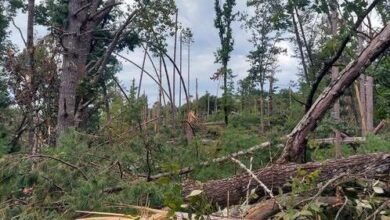
DEC Tree Nursery Collects Pine Cones After Tornado. After an EF-1 tornado flattened pines in Wilton in August, Saratoga Tree Nursery staff gathered 61 bushels of pitch, red and white pine cones, enough seed for up to 500,000 seedlings.
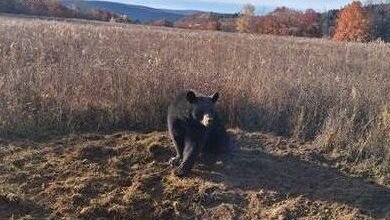
Black Bear Freed from Coyote Trap in Steuben County. Environmental Conservation Officers and a DEC wildlife technician used catchpoles and a board to free an adult female black bear caught in a coyote trap on a Canisteo farm, and released her unharmed.
Recreation
Avalanche Pass Slide Rescue; Two People With Dementia Located. Forest Rangers flown in by a State Police helicopter roped a Connecticut hiker down from a new slide in Avalanche Pass, and searchers found two missing people with dementia in Webb and Wilmington, one after a basset hound turned up at the Whiteface lodge.
New Hike, Bike, Ski Trail Network Opens at Shandaken Wild Forest. DEC finished an 11.5-mile multi-use network on the Giggle Hollow parcel in Ulster County, with 7 miles of singletrack and a 3-mile continuous downhill, reached from the Lost Clove trailhead or ORDA’s Pine Hill Day Use Area at Belleayre Beach.
Arts
The Subway in Paint: New York in the 1930s. Jaap Harskamp looks at how three Jewish immigrant artists, Bernard Gussow, Joseph Solman and Mark Rothko, painted anxious, isolated subway riders during the Great Depression.
Books
Seneca Village: Black Freedom & Manhattan Real Estate. Alexander Manevitz’s Seneca Village: A Story of Black Freedom and Manhattan Real Estate (Cornell University Press, 2026) reconstructs the mostly Black landowning community of about 225 residents that stood from 1825 to 1857 on land now in Central Park, until the city evicted them.
The Ancient House: Albany’s Dutch-Haudenosaunee Community. In The Ancient House: Constructing Community in the Seventeenth-Century New York Borderlands (UNC Press, 2026), Erin B. Kramer of Trinity University argues that early Dutch-Haudenosaunee relationships gave Albany an outsized role in colonial diplomacy, as Haudenosaunee people shaped the town’s politics and laws through a century of negotiation. The title comes from a Haudenosaunee orator who called Albany “the ancient house.”
Podcasts
How the Dutch Helped Win the American Revolution. On her Ben Franklin’s World podcast, Liz Covart talks with historians Dirk Alkemade and Matthijs Tieleman about Dutch arms sales to the Patriots from 1774 and why the Dutch Republic backed American independence.
Want to Contribute a Story?
Submit an article, a newly published book, press release by following these guidelines.
Source link