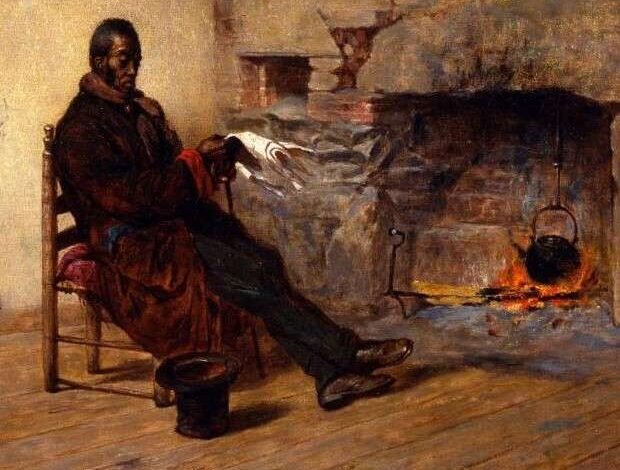
 On Thursday, November 12, 2026 at 7 pm, Historic Huguenot Street (HHS) will host a virtual presentation and conversation entitled “Gradual Abolition to Freedom: New Research on John Hasbrouck and His Family” with Josephine Bloodgood and Kate Hymes. The talk will focus on the story of a Black child born in New Paltz in 1806 under New York’s gradual abolition acts and explores the personal stories of how the laws impacted John, his enslaved parents, and other family members.
Having learned how to read and write, John later kept two remarkable account books, purchased land, and was one of the town’s earliest Black voters.
“For those interested in Black history in New Paltz, John Hasbrouck will be a familiar name,” said Josephine Bloodgood, HHS Director of Curatorial & Preservation Affairs. “This talk will highlight new research and discoveries about John’s family and his early adult years as a freeman, and explores larger themes of slavery and emancipation in New York State in relation to John’s life.”
The talk is inspired by the online exhibit John Hasbrouck, “A Most Estimable Citizen,” recently awarded a Greater Hudson Heritage Network Award of Excellence.
The virtual talk on November 12 will be presented entirely online via a link provided after registration here. Contributions collected via registrations will be shared equally between the Dr. Margaret Wade-Lewis Center Black History Cultural Center and Historic Huguenot Street.
General admission is $8 and discounted access for seniors, students, active military personnel and their families, and veterans is $5. Access is free for HHS members.
Kate Hymes is the former Poet Laureate of Ulster County and served as a founding trustee of the Margaret Wade-Lewis Black History Cultural Center, for which she headed the Building and History Committees for three years. She writes and presents poems reflecting on the experiences of enslaved and free Black individuals and families in New Paltz and Ulster County.
Josephine Bloodgood is the HHS Director of Curatorial & Preservation Affairs and is active with the Margaret Wade-Lewis Black History Cultural Center’s Building and History Committees. Josephine is the author of the online exhibit “’Never was a slave,’ Jacob Wynkoop, Free and Black in 19th-Century New Paltz” and other exhibits, talks, and a walking tour app related to Black history in the community.
Historic Huguenot Street’s programs are supported by the New York State Council on the Arts, with the support of the Office of the Governor and the New York State Legislature.
About Historic Huguenot Street
A National Historic Landmark District, Historic Huguenot Street (HHS) is a 501(c)3 non-profit dedicated to preserving a pre-Revolutionary Hudson Valley settlement and engaging diverse audiences in the exploration of America’s multicultural past, in order to understand the historical forces that have shaped America.
As an educational institution founded by the town’s French-speaking Protestant descendants and chartered by the University of the State of New York Department of Education, HHS explores the lives of the early European colonists, honors the region’s Indigenous people, and acknowledges the enslaved and disenfranchised peoples who built this place.
Today, HHS is recognized as an innovative museum and community gathering place, providing visitors with an inclusive presentation of our shared past. For more information visit www.huguenotstreet.org.
About Margaret Wade-Lewis Black History Cultural Center
The Margaret Wade-Lewis Center (MWLC) at the historic Ann Oliver House preserves the Black experience in the Hudson Valley using the lens of free and enslaved lives in Ulster County, New York. The Mission of the Center is to engage, empower, educate, and heal the community through history and culture. For more information visit www.mwlcenter.org.
Source link