
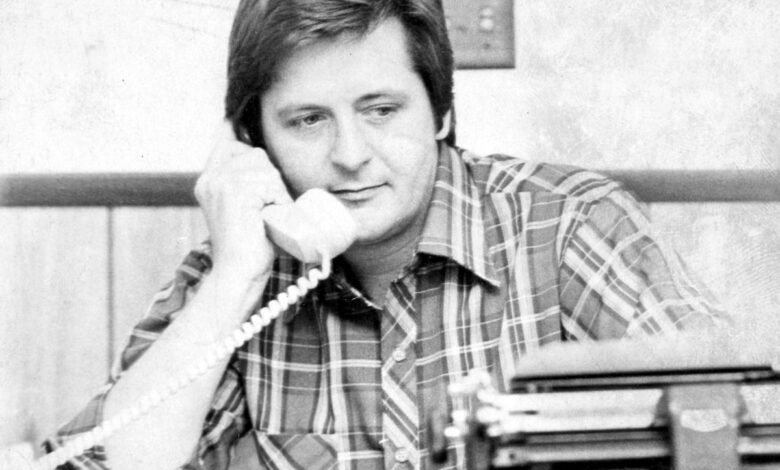
According to a story often repeated in mafia-history circles, the mob ordered the firebombing of reporter Ned Day in the predawn hours of July 8, 1986.
This is not true.
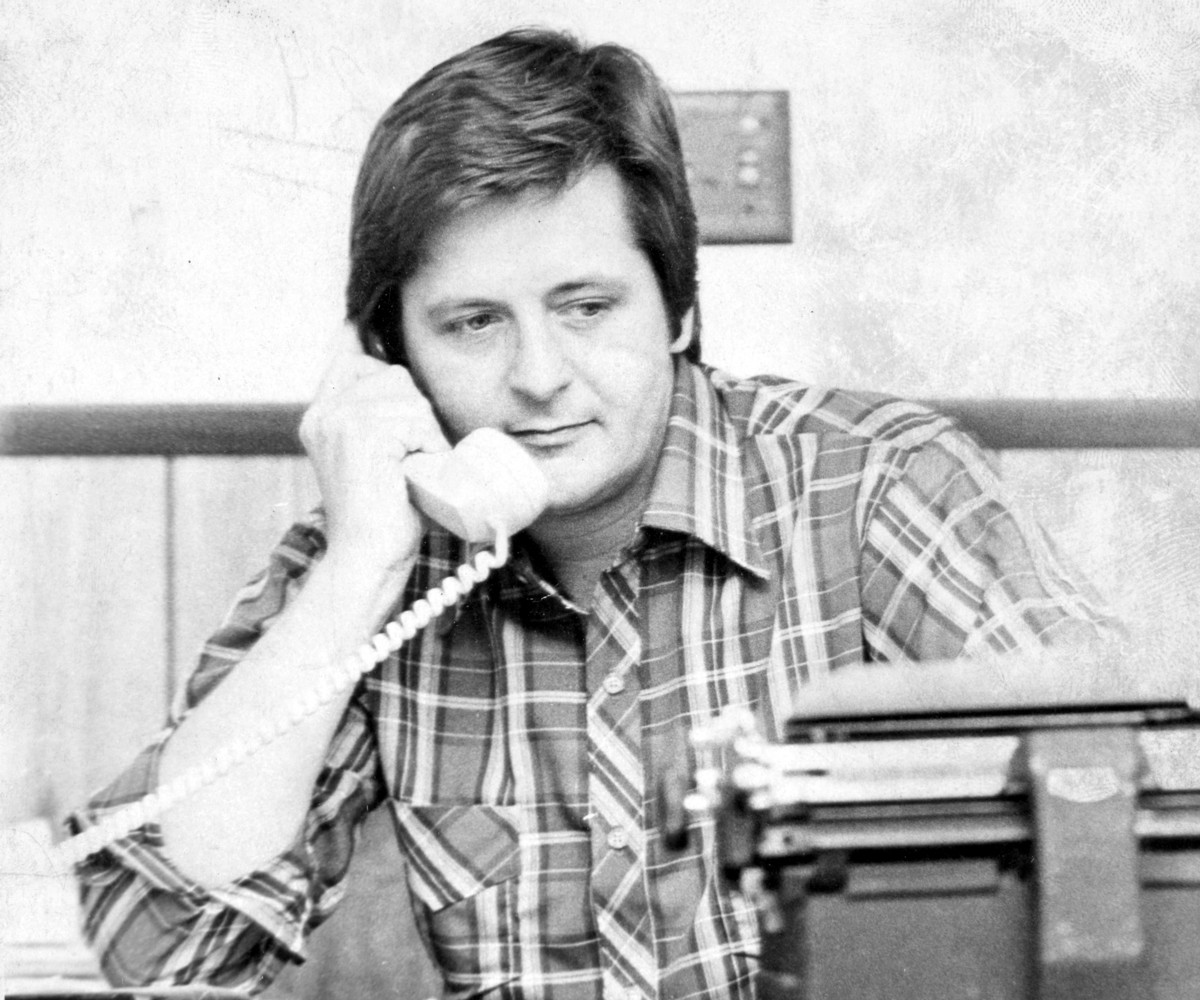
Ned Day was one of the most aggressive and successful crime reporters in Las Vegas history. From 1981 through 1987, he exposed the mob’s hidden influence over Las Vegas casinos. His reporting focused on Frank “Lefty” Rosenthal’s skimming operation at the Stardust and three other Argent Corporation properties, as well as the Hole in the Wall Gang — a burglary crew tied to Anthony “Tony the Ant” Spilotro, a volatile Chicago mob figure linked by the FBI to at least 22 murders.
These are the real-life events that later formed the basis for Nicholas Pileggi’s book and Martin Scorsese’s film, Casino.
But Day wasn’t only a great reporter. As a columnist, he didn’t hide his open contempt for some of the subjects he investigated — especially Spilotro, whom he once referred to as “a fireplug who walks like a man.”
“I remember soon after I first got to town … my friend asked me to not talk about him,” Day told Las Vegan magazine in 1981. “If what they say about Spilotro is true, then he’s smart enough to know that if he gets angry with something I write, there’s no way he can rationally make a move against me because he stands to lose too much.”
Referencing Don Bolles — a Phoenix journalist who was blown up in his car by the mob five years earlier — Day said: “If something happens to me, then 60 Minutes and Geraldo Rivera and all those jerks are going to be all over here like they were in Arizona.”
Burning Lie
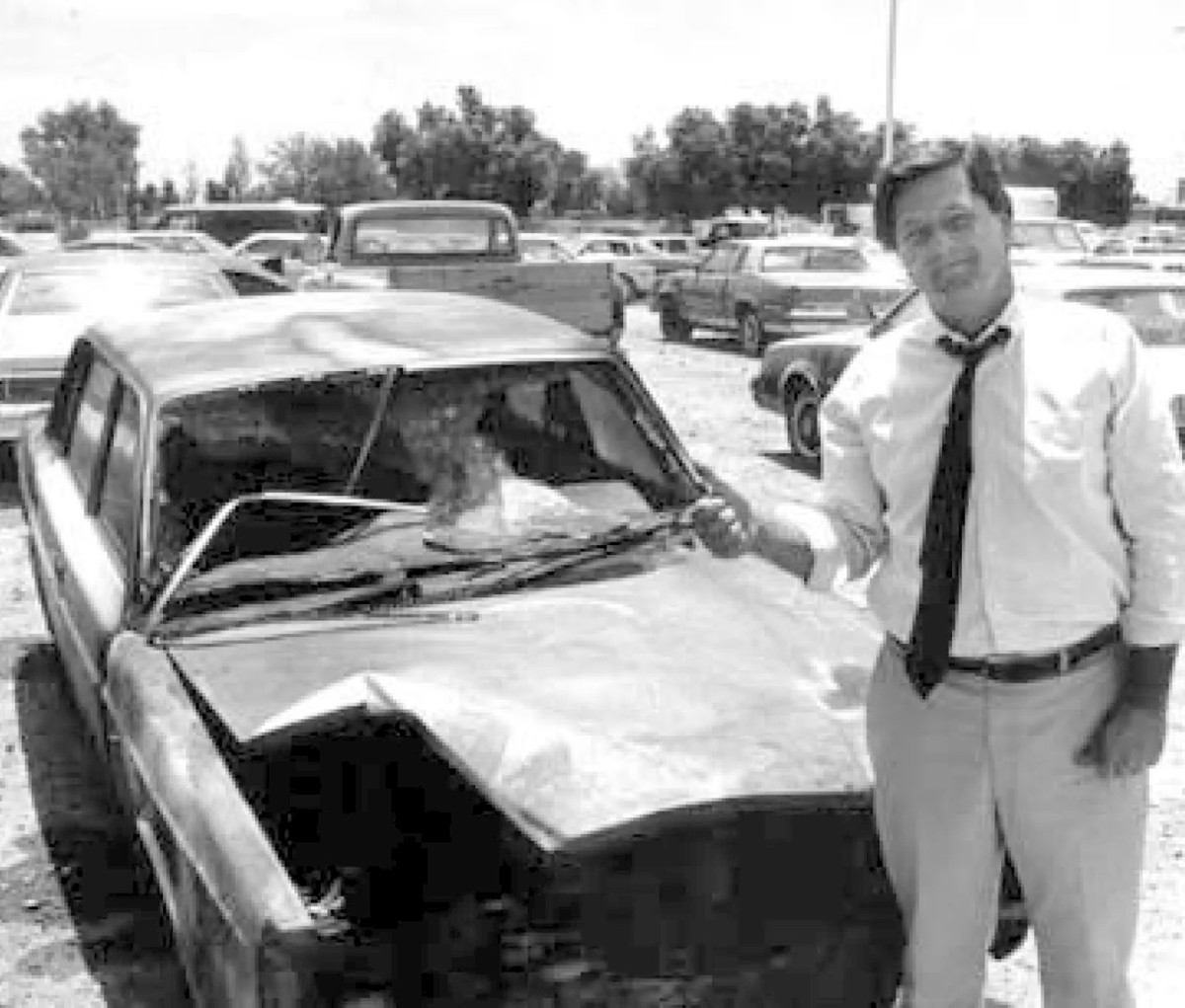
Day’s car wasn’t firebombed.
The Los Angeles Times and Miami Herald initially reported it that way. The police did, too, but they later amended their findings, determining that someone poured a flammable liquid around Day’s 3-year-old Volvo, parked near his apartment complex, and set it ablaze.
No explosive device was involved.
It had only been four years since a bomb had exploded beneath Rosenthal’s car — as would later be recreated for the opening scene of Casino — and the memory of that attempted hit was fresh in nearly every Las Vegas resident’s mind.
Day’s vehicle was destroyed, but he wasn’t anywhere near it at the time.
Who Did It?
Not Tony Spilotro. He and his younger brother, Michael, disappeared on June 14, 1986 — 24 days before Day’s car was torched — and their bodies were discovered in an Indiana cornfield eight days later.
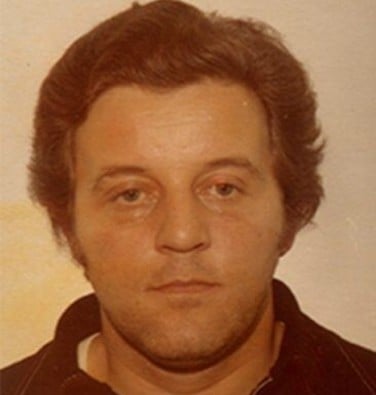
Even if Spilotro had ordered a fiery warning delivered to Day — and there is no evidence he did — his murder would have effectively voided any of his standing orders. (Mob soldiers are highly unlikely to carry out directives from a boss who has just been executed by his own superiors.)
No one was ever arrested or charged for the crime, which remains unsolved.
Day himself suspected surviving Spilotro associates still active in Las Vegas. He believed they resented his reporting and wanted to send a message.
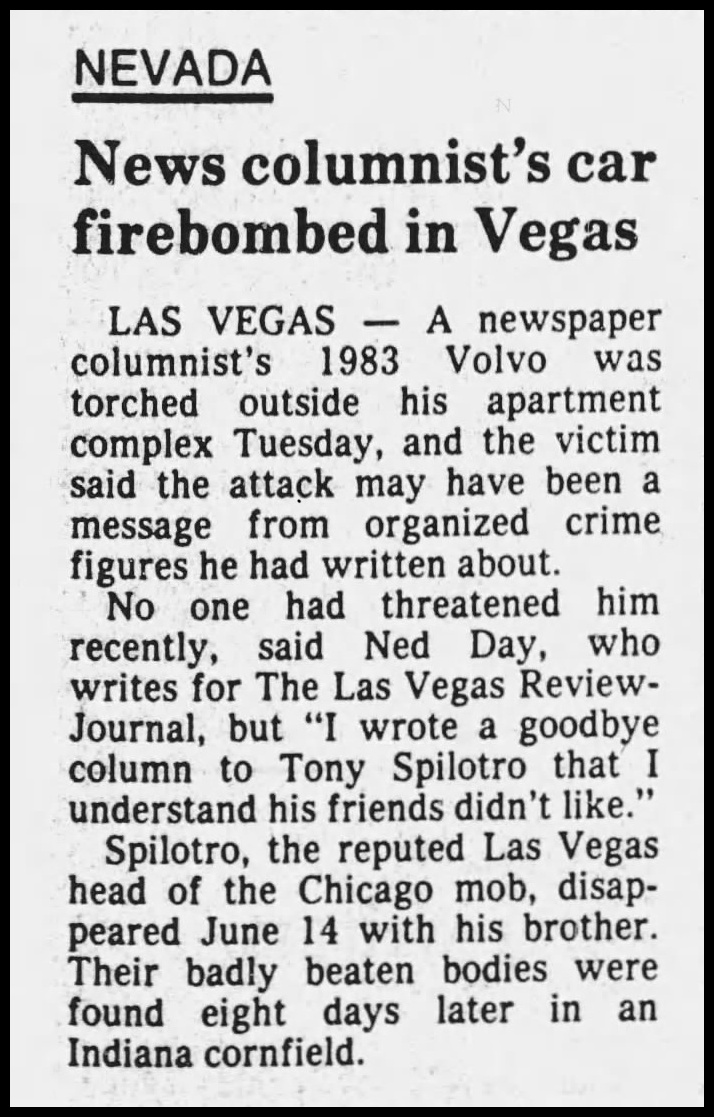
“I wrote a goodbye column to Tony Spilotro that I understand his friends didn’t like,” Day told The Associated Press afterward.
That column began with the headline “In death, sinister Tough Tony Spilotro was Trivial” and ended by describing Spilotro’s remains as “not even a worthy sack of fertilizer.”
Here it is, preserved by Tom Delahunty of the Las Vegas Mafia History Facebook group:
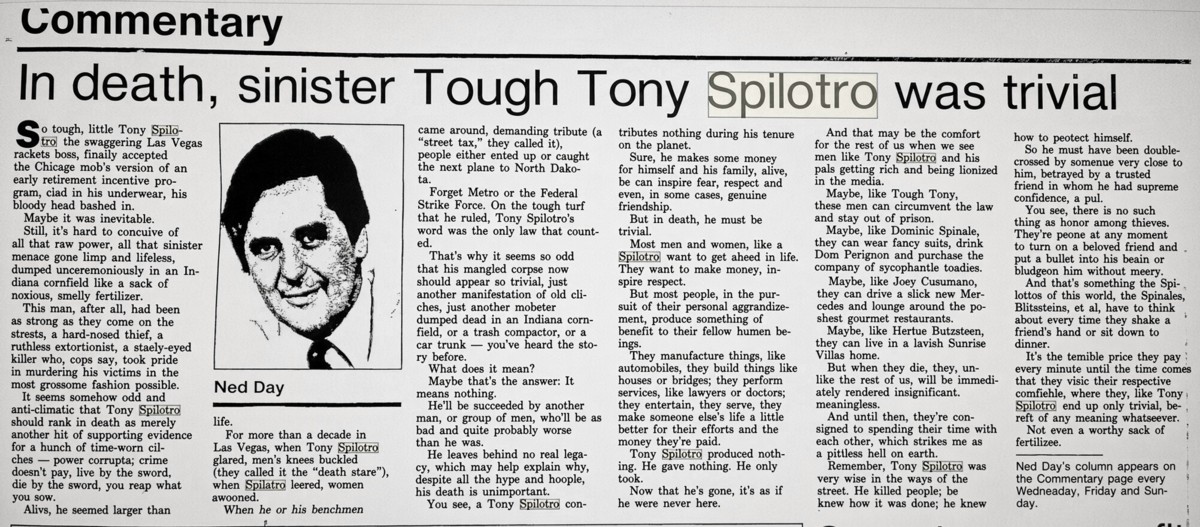
Shortly before his car was torched, Day told The Associated Press he had been threatened by two of Spilotro’s associates and, a few days after that, found big dents smashed into the same car.
But, as stories go, “Mob sets reporter’s unattended car on fire” doesn’t have quite the ring of “Mob orders reporter car-bombed.”
“To sneak into a parking lot in the dead of night and set a car on fire is not exactly the most courageous act in the world,” Day told The Associated Press.
In his first column following the incident, Day delivered his own message to his car-becuers, telling them to “kiss my rosy, red patootie.”
Bonus Bust
Day died Sept. 3, 1987 — 13 months and 26 days after the incident — while snorkeling with a friend in Hanauma Bay, Hawaii. He was 42. Many have long viewed his death with suspicion, questioning whether it was merely a coincidence that such a prominent mafia antagonist could die so young.
Authorities, however, found no evidence of foul play. The Honolulu coroner ruled that Day suffered a fatal heart attack.
Day’s close friend, veteran KLAS reporter George Knapp, echoed that assessment. Reporting at the time, Knapp noted Day was a heavy smoker and drinker whose diet and overall health placed him at high risk for heart disease.
“There were many people who may have wanted him dead,” Knapp said, “but they were not to blame for what happened at Hanauma Bay.”
Look for “Vegas Myths Busted” every Monday on Casino.org. Visit VegasMythsBusted.com to read previously busted Vegas myths. Got a suggestion for a Vegas myth that needs busting? Email corey@casino.org.
Source link