 The summer of 1777 gave promise of abundant harvest in the northern and western clearings of the State of New York; but the hearts of the people were troubled; the shadows of war were again darkening the land, and other hands might reap where they had sown.
British General John Burgoyne‘s invading army with its Indian allies was threatening the upper Hudson valley, while Barry St. Leger‘s force was descending the Mohawk River, each intent on reaching Albany.
There was widespread alarm when the fall of Fort Ticonderoga on the night of July 5–6 was announced and preparations were made by the settlers on the frontier to hastily abandon their homes on the nearer approach of the enemy.
Burgoyne was successful in his advance movement, until he encountered the obstructions placed in his path through the forest defiles, by the patriotic army. It was here he for the first time came in contact with American backwoods engineering.
The blockade of the northern wilderness route introduced an intricate problem, the solution of which taxed the endurance of his army to such an extent that when the barriers were removed he was not inclined to at once pursue the Americans who had fallen back.
General Philip Schuyler, at the head of the northern army of patriots, had done good work in so successfully retarding the progress of the enemy, while awaiting reinforcements for his own army of which he was greatly in need.
[From the lower Hudson Valley] the New York Council of Safety, assisted by General George Clinton, was untiring in its efforts to relieve the situation, which now had become critical. The militia resources of the State were exhausted.New York was bearing the whole burden of the struggle in her own State, by guarding the highlands on the south, the valley of the Mohawk on the west, and the upper Hudson on the north, where 4,000 of the patriot army, with a battery of two old field pieces, were left to oppose the advance of 8,000 disciplined troops, and a horde of Tories and and their Indigenous allies.
Uneasiness was rife in the ranks, when it was manifest that the army, for lack of support, would be compelled to retreat, leaving a portion of the northern district wholly unprotected; and this condition was alarmingly intensified by every fresh rumor of Tory depredations or Indian outrage, committed in the vicinity of their homes.
Under these circumstances, favor was extended to those who were desirous of removing their families to places of greater security. Perhaps during the whole period of the campaign, no greater tests of patriotic endurance were experienced than by those who remained at the post of duty under these trying circumstances.
On the 29th of July, General Schuyler retired to Saratoga, and from there to Stillwater. On the same day Burgoyne’s army reached the Hudson River. While the two armies were shifting positions, arrangements for inaugurating the first State Governor of New York, were being perfected.
 On July 30th General George Clinton was inducted to office and proclaimed Governor, Commander-in-Chief of all the militia, and, Admiral of the Navy of the State of New York. New York had now entirely discarded the provincial customs; its chief magistrate, for the first time in her history, had been chosen by the free holders of the State.
From the beginning of the campaign, the military affairs of the State had been under the supervision of the Council of Safety. The new Governor now assumed the duties of that department, and instituted reforms, that finally resulted in placing the army on a more substantial footing.
Urgent appeals for help were sent to the bordering States, with the following results. Connecticut was the first to respond with a promise of 1,400 men to be sent to Albany.
New Hampshire on the 5th of August, announced that Major General John Stark of the Continental Army had sent off 700 men to join Colonel Seth Warner at Manchester, and would follow next day with 300 more.
Massachusetts, under date of August 14th, reported that orders were issued that men from the counties of Worcester and Middlesex, be sent to reinforce Colonel Warner.
In 1772, the County of Albany was divided, and two new counties set off, namely: Charlotte and Tryon. The easterly half of Vermont lying west of the Connecticut River, also claimed by New York, and, since forming a part of Albany County, was set off in two counties, Cumberland 1766, and Gloucester 1770.
The whole tract of country including the little and big Hoosick rivers, was called Hoosick, and no divisions of townships were made until after the revolution. Hoosick Falls then known by the Indian name of Quequick (Leaping Water), contained only three or four families.
On the 11th day of August, the commanding officers of militia in the Counties of Charlotte, Cumberland and Gloucester, were ordered to make reports, and, forthwith on receipt of the order, to make a draft of one-fourth part of their regiments.
This order was issued five days before the Battle of Walloomsac [a New York name for the Battle of Bennington]. During this stage of the campaign, the Tories, emboldened by the near approach of the invading army, assumed vented their wrath on the persons and the belongings of former friends and neighbors who had espoused the patriotic cause.
This same element kept the British Commander informed of the condition of the northern army, and of the fact that dissatisfaction with its Generals had been openly and freely expressed.
He was aware that armed bodies of these Loyalists awaited the opportunity to prove their allegiance to the crown, and was flattered with the assurance that an advance into the inhabited country would be the signal for others to declare themselves in public support of the crown.
The scheme long entertained by Burgoyne for a side invasion east into New England, was formulated in the depths of the forest. Unfortunately for this British Commander, there was no King Hendrick at his right hand to illustrate in rustic symbolism the futility of again dividing his army.
The part New York took in the battle at Walloomsac has received but scant recognition, due in part to the fact that her armies were engaged in nearly every section of the State during the occurrence.
The first report of the victory diverted attention and caused many misleading errors in designating the true location of the battle and efforts have been made since to erroneously impress on the minds of the people that New York had no share in the victory.
That “Hoosick furnished only Tories at the battle” is a reflection on the stability and heroism of the sons of the rock-ribbed valleys who ratified the Declaration of Independence by an immediate formation of four separate companies to sustain the principles enunciated in that world famed document.
A chronicler of the events in our early history has remarked “I believe sufficient has already been said to show that the inhabitants of Hoosick were not idle spectators, or lacking in interest or courage, or did not bear their quota in those war times.”
Most of the inhabitants between Cambridge and Sancoik had left before Friedrich Baum British force of Hessian, British, and Loyalist troops had left from Saratoga for Bennington. Many of the men returned to gather their harvests or join the army, irrespective of company or regiment.
 [Sancoik refers to a homestead and mill complex along the Walloomsac River in what is now North Hoosick, New York, now marked by a Lakes to Locks Passage site.]
[The house and mills at Sancoik were owned and operated by brothers John, David, and Peter Van Rensselaer were the sons of Hendrick Van Rensselaer and Elizabeth VanBrugh. The brothers actively supported the revolutionary cause and Peter Van Rensselaer notably evacuated his family to Albany to seek refuge just as the enemy moved into the Hoosick Valley.]
David Younglove a member of the 16th New York regiment, was the first to notify the patriot army of Baum’s near approach, then within a few miles of Sancoik Mill.
[Stark dispatched Colonel William Gregg with a detachment of two hundred men to scout the position of the Baum’s forces. Gregg’s troops advanced about seven miles and posted themselves at Sancoick on the evening of August 13th.] [Early on the morning of the 14th, Baum encountered Gregg’s scouting party and a skirmish ensued. The Rebels fired one volley, then withdrew into the woods. The Rebels had dismantled the bridge surface, giving Gregg time to fall back two miles to meet Stark and his army at the ford of the Walloomsac.]On the morning of August 14th, while some of Baum’s officers were standing on the porch of the Van Rensselaer House at Sancoik, James Moore of the Charlotte County, NY, regiment, fired the first shot at Baum’s troops, his rifle ball passing through the body of an officer and through the door behind him. This was Moore’s second exploit, he having shot an Indian man.
[The German surgeon Julius F. Wasmus, arrived at the scene with his regiment of German Braunschweig Dragoons, a mounted infantry regiment under the command of Lieutenant Colonel Friedrich Baum.] [“This was an elite group of mounted soldiers, trained to move and fire while on horseback,” notes Locks to Lakes Passage. “They were noted for their thigh-high riding boots, 12-pound broad swords, and their handlebar mustaches, but they were dispatched here without horses and needed to adapt to being on foot.”]“We set out at 5 o’clock this morning, reached the parish of Sancoick at 7 o’clock and made a rendezvous near a beautiful house, which the owner had left this very morning,” Wasmus wrote later that day. “There was little household furniture left in the house but what there was was being destroyed by Savages.”
“These also discovered a beautiful English Clock, several Portuguese [coins] and guineas in a chest. The owner of this house, son of a Dutchman by birth, is called Van Rensselaer. He had a gristmill with a sluice near his house. The mill was full of flour and the floor full of wheat and rye; we also found several barrels of salt here.
“Our tetes [Teten] had driven off the Rebels detachment that was standing in front of the bridge. Thereby one of the Savages was wounded, whom I had to bandage on orders of our commander. [Teten here refers to a Tête-de-pont, a hastily erected bridgehead at the end of a bridge closest to the enemy.]
“At this house, the enemy had just slaughtered an ox; it had not yet been completely skinned. We set out again and marched across the bridge at the mill; at the houses we were passing, we came across some more horses, which we took along.”
The numerical strength of the New York troops that rendered service at the battles of Walloomsac cannot be determined at this late day, there being no official records to supply the data needed, but sufficient reliable information disproves the often repeated assertion, that there were none in the battle.
To those who are aware of the conditions that then existed in the State, it is obvious that New York was at that time fully engaged in defending three points of attack from as many well appointed armies of the enemy.
It is known also that every man in the State capable of bearing arms was reminded of his duty to his country and called on to defend her. So thoroughly was the work of recruiting done that officers were forwarded into the northern counties who personally enlisted men for service under General Schuyler.
Such were the conditions of military affairs in the State at the time of Col. Baum’s invasion.
 A sufficient number of verified names to constitute the average militia company has been secured and accredited to the following: 4th Albany, 6th Albany, 3rd Line, 5th Artillery, 2nd Westchester, 6th Dutchess, 13th Albany, 14th Albany, 16th Albany, Charlotte County.
If the names of all the militia and volunteers from Cambridge, White Creek and Hoosick, could be procured, they would show that at least 150 men were under arms at the battle of Walloomsac.
Col. William Williams of Cumberland County (now Vermont) fought in that battle with his regiment under a commission from New York State; and his men, though preferring to act with the Vermont troops, were then under the jurisdiction of New York, from whom they received their equipment and supplies
B.H. Hall, Esq., in the “War of the Revolution” published in the History of Rensselaer County (1880), introduced the following document with these words: “It is probable that the second battle was begun and fought, in part, by a body of New Yorkers under command of Col. John Williams of White Creek, now Salem. Arriving during the progress of the first battle, he, although belonging to the New York line, offered his services, and received the following order:
“State of Vermont, in Council of Safety, August 16, 1777: — To Colonel John Williams – Sir: You will proceed with your party toward the lines, and if the enemy should retreat, you will repair to the road leading from St. Croik (Sancoik) to Hoosack, and, if you make any discovery, report to this council; at the same time you are to pay proper attention to the road leading from Hoosack to Pownal.” [signed] Paul Spooner, Secretary.”
Of the second battle, the details are meager. Scarcely any mention of it has been made by any of the early writers. We learn from the narrative of Dr. David Younglove, who was wounded in the battle, that “The most of Starks men that fell on that day were killed there.”
Thomas Comstock, a member of the 16th New York regiment, gave up his life in that battle.
The following list is the result of an effort to discover and compile, as far as possible, the names of the New York patriots at Walloomsac August 16, 1777:
John Abbott, Isaac Abbott, Ephraim Abbott, Theodore Abbott, Daniel Brown, Michael Beadle, Joseph Beadle, Matthew Brewer, David Barnhart, Cornelius Brassie, Nathaniel Barnett, John Cooper, Thomas Comstock, Henry Clark, Ebenezer Clark Jr., and hired man, Isaac Fowler, William Gilmore, Jonathan Gardner, Isaac Hoard, James Irvine, James Jones, Israel Keach Sr., John McClung, James McFarland, Robert McMurray, David Matthews, Jacob Odekirk, Peter Ostrander, Amos Perry, Bradock Peckham, Ichabod Prosser, John Rowan, William W. Reynolds, Henry Sherman, Andrew Van Surdam, John Wier, Austin Wells, Daniel Wells, Benjamin Wells, James Weaver, David Younglove, John Younglove, and Samuel Younglove.
Read More About The Battle of Bennington
This essay by Nelson Gillespie, President of the Hoosac Valley Historical Society, was published in Proceedings of the New York State Historical Association with the Quarterly Journal, Volume 5 (1905). The letter from Wasmus was added, it was slightly edited for clarity, and annotated by John Warren.
You can visit the sites mentioned in this essay along the Locks to Lakes Passage.
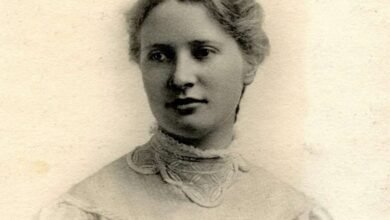
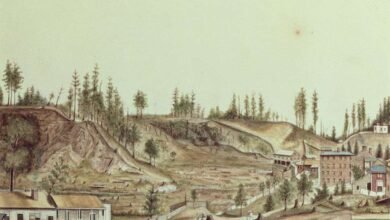
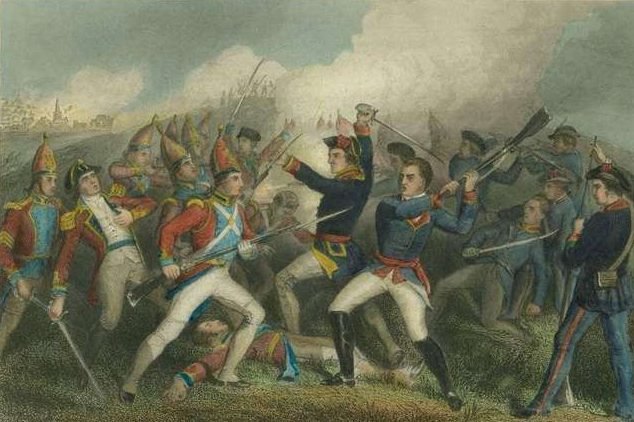
Illustrations, from above: View of Old Bennington, Vermont, by Daniel Folger Bigelow, ca. 1870, (courtesy Bennington Museum); General George Clinton; Sancoik, also known as Van Schaick Mill, in North Hoosick from Benson J. Lossing’s Pictorial Field-Book of the American Revolution (1851/52); and a painting of the Battle of Bennington by Alonzo Chappel, ca. 1860.
Source link