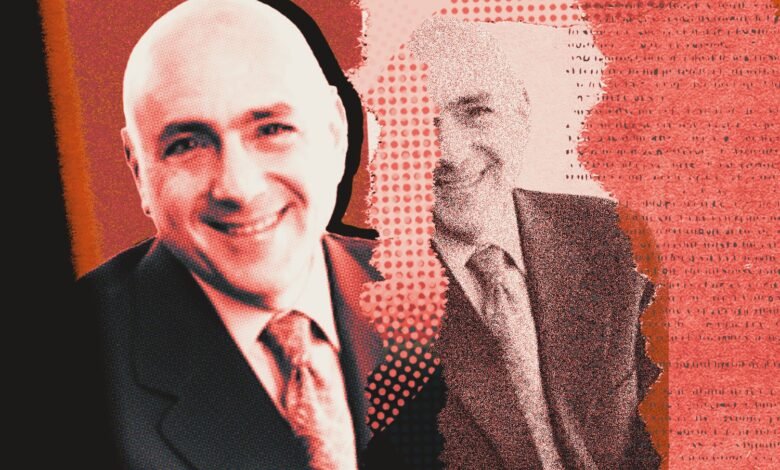
Mitch Kossoff knew he was committing a cardinal sin when he first dipped into his law clients’ escrow funds to prop up his struggling businesses. But he justified it by telling himself what desperate people in similar situations often do: It’s just for a little bit.
“The idea in my mind, as sick as it was and inappropriate as it was, is that ultimately I could grow my law firm and be able to have more than enough money to repay the monies I took,” the disgraced real estate attorney told members of his parole board in July. “But of course Covid destroyed that as it destroyed my law firm.”
The law firm, Kossoff PLLC, fell apart in the spring of 2021 when its founder went AWOL after irate clients started demanding their money back.
Kossoff decided to turn himself in to the feds on the advice of his attorney. The scandal, his subsequent trial and the ongoing efforts to compensate his victims exposed cracks in the escrow system — and the potential for wide-ranging harm.
Kossoff was granted parole and released in September.
During his parole hearing, a transcript of which was obtained through a Freedom of Information request, Kossoff explained how his attempts to keep his moribund businesses alive spiraled out of control and how he stole more than $14 million. He also discussed his plans post-release, which include working as an administrative assistant for a private detective.
It all started in 2008 when his law firm and three other businesses (a messenger service business, a detective firm and his parents’ manufacturing company) started to fail.
Kossoff, now 73, at first tried putting his own personal money into the companies, but they weren’t turning around.
“It was like pouring gasoline onto the fire,” he said.
That’s when he made the decision to cross the red line and pinch from the escrow funds he oversaw for his clients.
“And in 2012, based upon my inexcusable and poor management skills, based upon, you know, my self-centeredness, my false pride, my sense of entitlement, my fear of losing my mother’s money and my inability to ask for help rather than sell or downsize those buildings, I started taking money at the very end of 2011 and the beginning of 2012 from my clients’ escrow funds,” he explained. “I paid those monies back until 2017 when I no longer was able to do so.”
The pandemic was the final nail in the coffin, he said.
Kossoff turned himself in and pleaded guilty in 2021 to three counts of grand larceny and one count of scheme to defraud. He was sentenced to 4.5 to 13.5 years in prison and was disbarred in 2022.
Convicted and disgraced, Kossoff went away to the Groveland Correctional Facility in Western New York. While in prison, he worked as a computer operator and facilitated Jewish studies.
He served a little more than four years and was released last month.
As for his plans after getting out, Kossoff said he has a job offer as an administrative assistant at a detective agency. He said his relationship with his wife is rocky and that he will be living with someone else upon release. (The person’s name is redacted, along with other portions of the transcript.)
Kossoff said he has no money left; he handed whatever funds he did have over to the trustee overseeing his law firm’s bankruptcy. (The trustee, Albert Togut, has spent the past several years trying to claw back stolen funds. Earlier this year, he sued JPMorgan Chase for $18.5 million, alleging the bank knew of Kossoff’s theft and did nothing to stop it.)
In response to a question from one of the parole board members, Kossoff said he didn’t use the stolen money to finance his lifestyle. But he acknowledged that “money is fungible” and said that he was using income he earned from his firm to pay rent for an expensive apartment.
“What I should have done was sat down with my wife and said, look, we have to downsize and, you know, take a hit because my businesses aren’t doing well,” he explained. “But because of my own shortcomings I never did that so … to say that none of the money went … to my personal living would be a misstatement I believe.”
(Prosecutors in the Manhattan District Attorney’s office, to the contrary, said Kossoff used his clients’ funds to “live a lifestyle that would have otherwise been beyond his means,” citing the apartment rent of $19,000 a month and “an average of more than $16,000 per month on credit card bills alone.”)
He said The Lawyer’s Fund for Client Protection — a state agency set up to protect clients from the exact crime Kossoff committed — reimbursed his victims.
“I hate myself for having … breached all of my ethical obligations, but I did say to them that if they needed anything from me I would be more than happy to do that,” he said.
Kossoff has started writing amends letters to his victims, friends, family, employees, clients and business associates.
He said he’s trying to “balance the scales” for his “horrible decision-making and all the harm” he’s caused.
“There’s no excuse or justification for my horrible conduct,” he said. “You can’t put lipstick on a pig here. I did horrible things. A lot of them had to do with defects of my own character, which I’m very well aware of right now, and I think that I have gotten some control over. I would be very grateful to — at least [for] the remaining years that I have left — get out and try to basically make direct amends as best as I can.”
With his name tarred by scandal, Kossoff said he hopes to undo some of the damage.
“And to try to rewrite my story to some extent … for my kids and what have you so that maybe they’ll regain a little bit of respect for me.”
Read more

Real estate attorney Mitch Kossoff vanishes – raising questions about clients’ millions
Disbarred real estate attorney Mitch Kossoff gets 4+ years in prison

Mitch Kossoff gets early prison release